Skip to content

The way people search for information has fundamentally changed.
AI-powered tools like ChatGPT, Google’s AI Overviews, and Perplexity now answer complex questions directly, pulling from content across the web and synthesising responses in real time.
For marketers and content creators, this shift creates a new playing field.
Finding AI search opportunities means understanding how these systems select, cite, and surface content, then positioning your work to be part of those answers.
The brands that figure this out early will capture attention in channels their competitors haven’t even started thinking about.
Traditional SEO isn’t dead, but it’s no longer the whole picture.
If your strategy still revolves entirely around ranking on page one of Google’s blue links, you’re missing a growing share of how people actually find and consume information in 2026.
The opportunity is real, but it requires a different lens: one focused on conversational intent, structured authority, and genuine information value rather than keyword density alone.
Understanding the Shift from Traditional to AI-Driven Search
Search has always evolved, but the current transition represents something more than an algorithm update.
AI-driven search doesn’t just match your query to a list of pages.
It reads, interprets, and synthesises content to deliver a direct answer. This changes what “visibility” means for your content.
The Rise of Large Language Models in Information Retrieval
Large language models (LLMs) like GPT-4o, Gemini, and Claude process queries as natural language conversations rather than strings of keywords.
They draw on massive training datasets and, increasingly, real-time web retrieval to construct answers.
When someone asks Perplexity “What’s the best CRM for a 10-person sales team?”, the response isn’t a list of links. It’s a synthesised recommendation with citations.
This means your content needs to be the kind of source these models trust and reference.
Pages that provide clear, well-structured, authoritative answers are far more likely to be cited. Thin content that exists purely to rank for a keyword rarely makes the cut.
Differences Between Keyword Matching and Semantic Intent
Traditional search engines matched keywords in your query to keywords on a page.
AI search works differently: it interprets the meaning behind your question and looks for content that addresses the full scope of that intent.
A query like “how do I reduce churn for my SaaS product” triggers a response that pulls from multiple angles: onboarding, customer success, pricing strategy, and support workflows.
This means you can’t just target a single keyword phrase and hope for the best.
Your content needs to address the broader topic with depth and specificity.
Think about what a knowledgeable human would actually want to know, then answer that comprehensively.
Identifying High-Value Conversational Queries
Not every query represents an AI search opportunity.
The highest-value targets are questions where users expect nuanced, multi-step answers rather than simple facts.
These are the queries where AI tools shine, and where your content can earn citations.
Analysing Long-Tail Question Patterns
Long-tail questions are your best entry point.
Tools like AlsoAsked, AnswerThePublic, and even the “People Also Ask” boxes in Google results reveal the specific questions your audience is typing into AI tools.
Look for patterns: questions that start with “how do I,” “what’s the best way to,” or “should I” tend to generate AI-synthesized responses.
Here’s a practical approach:
- Pull question-based queries from your Google Search Console data
- Cross-reference them with AI tools to see if they trigger AI Overviews or Perplexity citations
- Prioritise questions where existing answers are shallow, outdated, or generic
- Group related questions into content clusters you can address in a single, thorough piece
The goal is to identify queries where AI tools are actively generating responses but the source material they’re pulling from is weak.
Targeting Complex Problem-Solving Keywords
Simple factual queries (“What year was Python released?”) don’t offer much opportunity because the answer is static and universally available.
Complex problem-solving queries are where AI search opportunities become most valuable. These are queries where the answer depends on context, trade-offs, or expertise.
For example, “how to migrate a WordPress site to headless CMS without losing SEO value” requires a detailed, opinionated response.
AI models need reliable sources for these kinds of answers.
If your content provides a clear, step-by-step process backed by real experience, you become the source these models reference. Focus your efforts on the questions that require genuine expertise to answer well.
Auditing Content for AI Visibility and Citation Potential
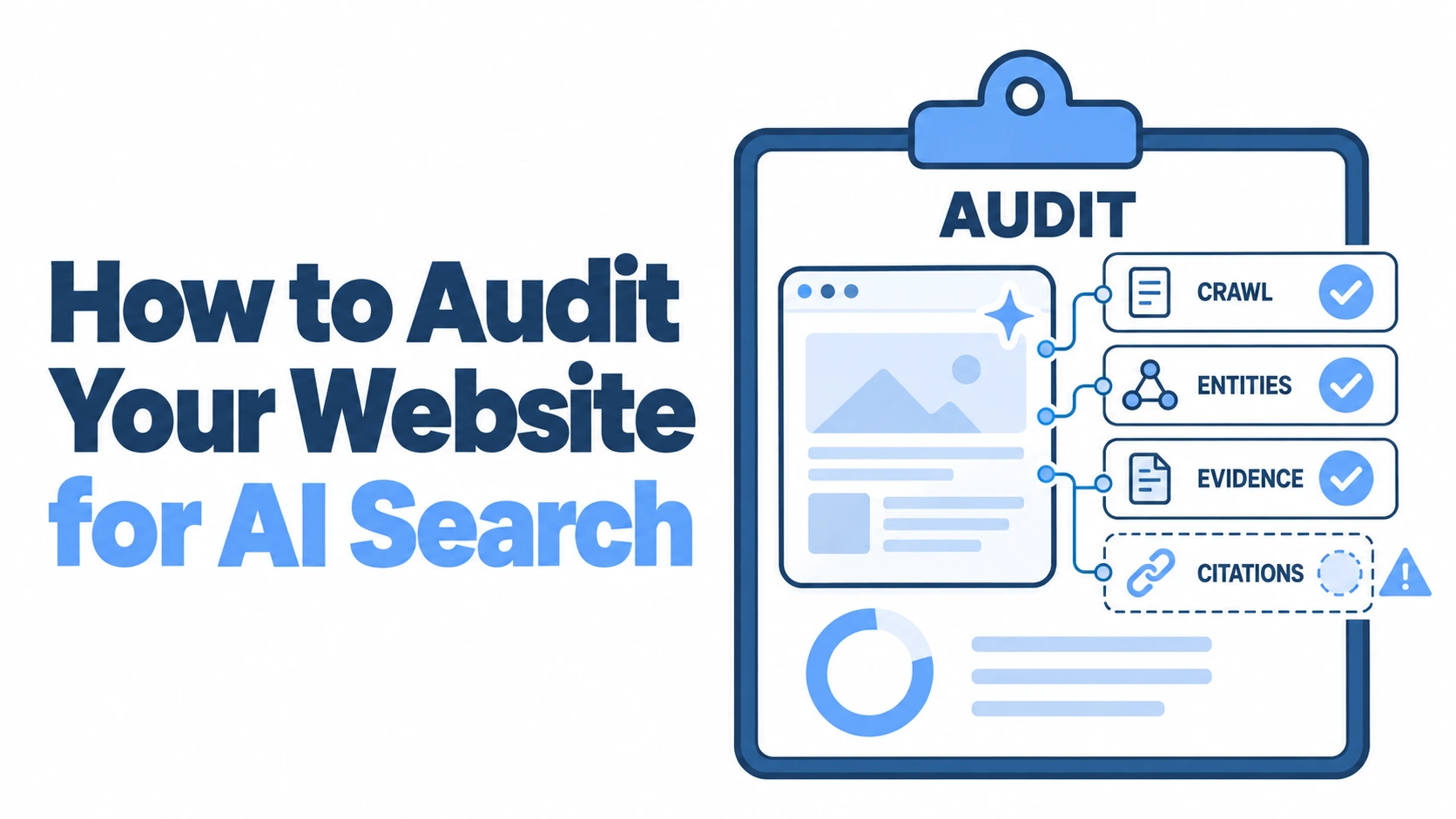
Once you’ve identified the right queries, you need to evaluate whether your existing content is positioned to be cited by AI systems. This audit process looks different from a traditional SEO content review.
Leveraging Structured Data for Better LLM Parsing
AI models parse content more effectively when it’s well-organised.
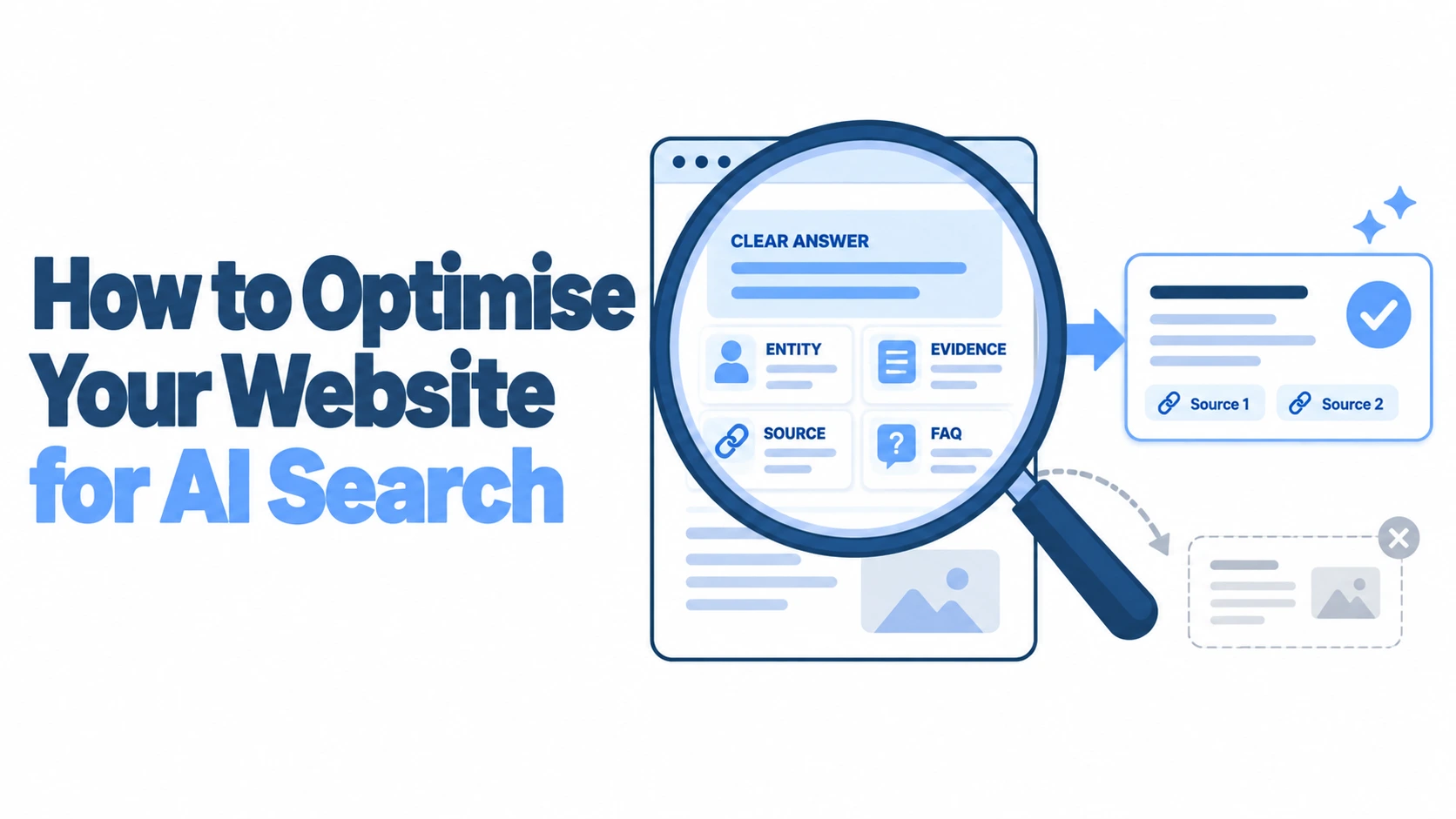
Schema markup, clear heading hierarchies, FAQ sections, and concise definitions all help LLMs extract and attribute information from your pages.
If your content is a wall of text with no structural cues, AI tools will struggle to pull specific answers from it.
Start by reviewing your highest-traffic pages:
- Does each page use descriptive H2 and H3 headings that mirror common questions?
- Are key definitions, steps, and recommendations clearly stated rather than buried in long paragraphs?
- Have you implemented relevant schema markup (FAQ, HowTo, Article)?
- Do your pages include author information and publication dates?
These structural elements don’t guarantee citations, but they make it significantly easier for AI systems to identify your content as a reliable source.
Optimising for E-E-A-T to Earn AI Recommendations
Google’s E-E-A-T framework (Experience, Expertise, Authoritativeness, Trustworthiness) matters even more for AI search than for traditional rankings. LLMs are trained and fine-tuned to prefer authoritative sources, and retrieval-augmented generation systems actively filter for credibility signals.
Demonstrate real experience by including original data, case studies, or firsthand accounts. Author bylines with verifiable credentials help. External citations from reputable publications strengthen your domain’s authority in the eyes of both search engines and AI models. If you’re writing about financial planning, having a certified financial planner as the credited author carries weight that a generic “staff writer” byline simply doesn’t.
Mining Gap Analysis Tools for AI-Generated Snippets
Understanding where AI tools are already generating answers, and where those answers fall short, gives you a concrete roadmap for content creation and improvement.
Monitoring Search Generative Experience (SGE) Real Estate
Google’s AI Overviews (the evolution of SGE) now appear on a significant percentage of search results.
Tracking which of your target queries trigger these overviews, and whether your content appears as a cited source, is essential. Tools like Semrush’s AI Overview tracking, Ahrefs, and specialised platforms like Otterly.ai let you monitor your visibility in these AI-generated responses.
Pay close attention to queries where AI Overviews appear but your content isn’t cited.
These represent gaps you can close. Compare your content against the sources that are being cited: what are they doing differently? Often, the cited sources provide more specific data, clearer structure, or more recent information. Those are the gaps to fill.
Tracking Competitor Mentions in AI Chat Interfaces
Your competitors may already be earning citations in ChatGPT, Perplexity, and Gemini responses. Manually testing key queries in these tools reveals who’s being referenced and why. Some teams run systematic audits: testing 50 to 100 priority queries across multiple AI platforms each month and logging which domains appear.
When you spot a competitor consistently cited for topics you should own, analyse what makes their content the preferred source. Is it more comprehensive? Better structured? More recently updated? This competitive intelligence directly informs your content priorities. You’re not just competing for Google rankings anymore. You’re competing for AI citations, and the criteria are different.
Developing a Future-Proof AI Search Strategy
AI search is still evolving rapidly. Building a strategy that adapts as these platforms change requires focusing on fundamentals that won’t become obsolete.
Prioritising Information Gain and Unique Insights
Google has explicitly discussed “information gain” as a ranking concept: the idea that content providing new information beyond what’s already available deserves higher visibility. This principle applies even more strongly to AI search. Models trained on vast datasets don’t need another rehash of the same generic advice. They need sources that add something new.
Original research, proprietary data, expert interviews, and unique frameworks all increase your information gain score. If you’re writing about email marketing benchmarks, don’t just cite the same Mailchimp study everyone else references. Run your own analysis on your client data and publish the results. That’s the kind of content AI models are built to surface because it genuinely adds to the knowledge base.
Measuring Success Beyond Traditional Click-Through Rates
Traditional metrics like organic clicks and impressions don’t capture the full picture of AI search performance. When ChatGPT cites your content, you may not see a click at all, but your brand still earned visibility and trust with the user. New measurement approaches are emerging to address this gap.
Track brand mention volume across AI platforms using manual audits or monitoring tools. Watch for increases in branded search queries, which often spike when AI tools reference your content by name. Monitor referral traffic from Perplexity and other AI tools that do link to sources. And pay attention to share of voice in AI responses for your priority topics over time. These metrics won’t replace your existing analytics, but they’ll give you a clearer picture of whether your AI search strategy is working.
Building Your AI Search Playbook
The process of discovering where AI search can work for you follows a clear sequence: understand how AI models select sources, identify the conversational queries where you can add real value, audit your content for citation readiness, monitor the competitive landscape, and measure results with metrics that match the new reality.
None of this requires abandoning your existing SEO work. Think of AI search visibility as an additional layer built on the same foundation of quality content and genuine expertise. The brands winning in 2026 are the ones treating AI citations as a first-class channel rather than an afterthought.
Start with five to ten priority queries this week. Test them across Google AI Overviews, ChatGPT, and Perplexity. Note who’s being cited and why. Then build your content plan around closing those gaps. The opportunities are there for anyone willing to look for them with the right approach.