Skip to content

Effective content marketing websites do far more than publish articles and hope Google notices. They connect a useful answer to a credible business, a relevant service page and a friction-free enquiry path. That matters in the UK, where 74.5% of businesses report using content marketing, with blogs, images, video, infographics and case studies all playing significant roles in the mix, according to UK digital marketing format data. A blog on its own is no longer a strategy. It's more like putting a brass plaque on a closed shop.
The seven examples below take very different approaches, from local SEO and productised writing to integrated campaigns and multimedia distribution. I'm analysing each through a service-business lens: content format, information architecture, trust signals, conversion paths, scalability and ethical SEO risk. The distinction matters. White-hat practice earns visibility by being useful and honest, grey-hat shortcuts stretch the rules and black-hat tactics manipulate search systems. For broader context on building an inbound engine, see Bazzly's inbound playbook.
Table of Contents
- 1. DigiVisi Ltd
- 2. The Good Marketer
- 3. FATJOE
- 4. Contentellect
- 5. Copify
- 6. Hallam
- 7. Brafton UK
- Top 7 Content Marketing Websites Comparison
- Turn These Website Lessons Into Leads
1. DigiVisi Ltd
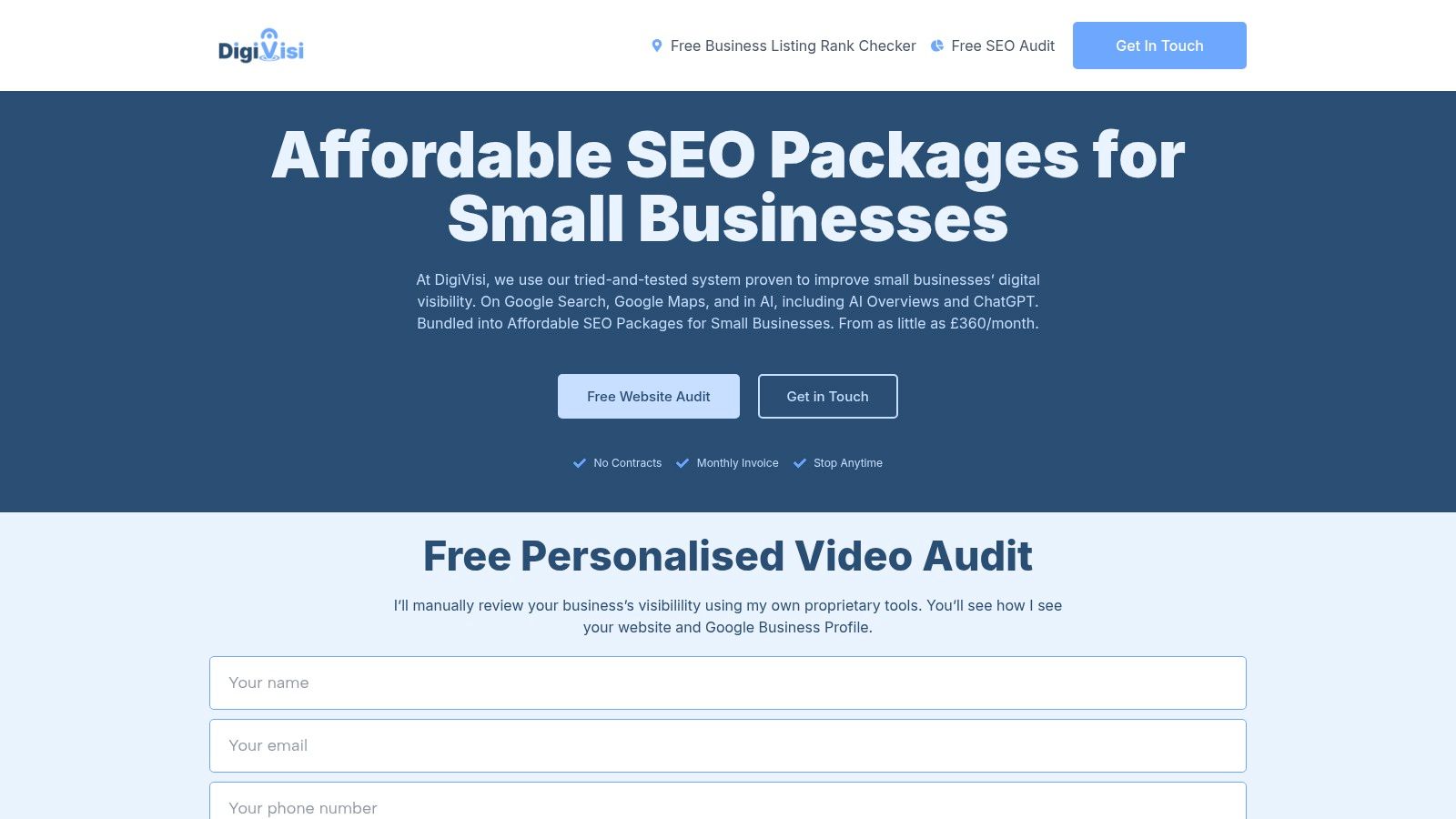
DigiVisi Ltd starts with a commercially sensible question: which search results already win attention for a target service, and what would a stronger page need to do? Its reverse-engineering approach analyses the Top 10 competitors for each keyword, then works across technical, on-page, off-page and local SEO signals. That gives a local firm a clearer route than publishing generic “helpful” blogs and crossing its fingers.
The information architecture is built around service pages, location pages, supporting articles and internal links. For a solicitor, that could mean connecting a conveyancing page to guides about searches, fees and completion, then directing each reader towards a consultation. For a roofing company, it might connect roof repair, storm damage and area pages to a quote request. The important distinction is that content supports a buying journey instead of floating in a lonely blog archive.
What makes the model practical
DigiVisi's three monthly packages, Foundations from £360 including VAT, Authority from £600 including VAT, and Market Leader from £1,000 including VAT, combine audits, keyword and competitor research, service and location page optimisation, internal linking, schema markup, citation and NAPW cleanup, plus regular blog content. Those prices are stated on the supplied service information, and prospective clients should confirm current inclusions directly.
The firm also offers Google Business Profile optimisation, conversion-focused Google Ads management and SEO-first website builds. Its content approach includes E-E-A-T principles and preparation for AI discovery, including AI Overviews, ChatGPT exposure and optional llms.txt support. Monthly reporting, position tracking and traffic statistics make the commercial conversation more concrete.
Practical rule: A content page should answer a real customer question, prove why the business is qualified to help and make the next step obvious.
DigiVisi highlights client outcomes, including significant enquiry increases for solicitors and trades, one trades client receiving up to 10 calls a day and a PPC client booking more than 15 jobs within weeks. These are supplied client examples, not guarantees. The firm doesn't present formal awards or industry certifications as its main differentiator. Instead, it leans on proprietary data access, transparent reporting and practical support.
The limitation is fit. This model is mainly designed for UK small businesses, local firms and multi-location SMEs, so an international enterprise may need a broader operating structure. Results also require sustained work on content, backlinks and local signals. Its ethical SEO profile is strong when competitor analysis informs better pages rather than copied wording or manufactured links. That's white-hat strategy, not search-engine dressing-up.
2. The Good Marketer
The Good Marketer's content marketing service presents content as an organised monthly programme rather than an occasional writing exercise. Its packages bring together strategy, copywriting, creative work, conversion-rate optimisation, analytics and reporting. That combination suits a small UK business that wants one accountable partner for both attracting visitors and encouraging them to enquire.
The strongest trust signal is commercial clarity. Published UK pricing, defined monthly hours and stated deliverables let an SME assess the relationship before a sales conversation. Fortnightly or weekly meetings, monthly reports and a unified dashboard also create a rhythm for decisions. A local accountancy practice, for example, could use the reporting to compare educational tax content with service pages and adjust its next production cycle around qualified enquiries.
Where the approach earns attention
The service includes keyword and audience research, content production, creative and video support, copywriting, analytics and GA4 tracking. That breadth helps prevent a common failure in content marketing websites, where a business publishes articles but never checks whether users reach contact forms, booking pages or telephone links.
The model also supports conversion thinking. A guide about preparing for a remortgage should not end with a vague “get in touch”. It should connect naturally to a mortgage advice page, explain what information the firm needs and offer a clear route to a conversation. That's useful for the reader and commercially legible for the business.
The main constraint is commitment. The supplied package information specifies a six-month minimum term, which may not suit a business wanting a short experiment. Packages also exclude ad spend, so paid distribution adds to the overall budget. Neither point makes the service unsuitable, but both should appear in the decision before a small firm signs up.
Ethically, the approach is comfortably white-hat when the strategy reflects genuine audience needs and reporting measures meaningful actions. The grey-hat temptation would be to chase publishing volume because hours remain. A Leeds plumber doesn't need a parade of thin articles about every imaginable pipe problem. It needs accurate service pages, useful local answers and proof that the team turns up when promised.
3. FATJOE
FATJOE's content writing service takes a productised route. Clients can order blog posts and website copy through a self-serve dashboard, track delivery and use a white-label workflow where required. That makes it attractive to a local marketing team or agency that needs a repeatable supply of drafts without recruiting and managing individual freelancers.
The service emphasises speed and operational convenience, including a 48-hour turnaround option, an unlimited revisions window and human writers working in UK and US English. Those are service features, not performance guarantees. For a Nottingham electrician, the practical value lies in turning a defined brief into a draft that can then be checked against the firm's real services, areas covered and customer questions.
The trade-off is obvious
FATJOE's clear entry pricing, menu of services and volume discounts reduce uncertainty at the ordering stage. A business can plan recurring blog production more easily when it understands what it's buying. The white-label capability also helps a small agency provide content under its own client workflow.
Efficiency comes at the cost of intimacy. Productised production generally gives the client less direct collaboration with a named subject-matter writer, so the brief has to carry more responsibility. A highly regulated solicitor's article, or a technical heating engineer's guide, needs expert review before publication. Writers can structure and explain information, but they shouldn't be expected to invent professional authority.
Useful content can be commissioned quickly. Expertise still has to come from the business.
The ethical SEO risk sits in the gap between output and oversight. Ordering large quantities of loosely related posts, adding keywords mechanically and publishing without internal links or commercial purpose drifts towards grey-hat behaviour. It can also produce a website that sounds busy while remaining unhelpful. Black-hat tactics, such as hidden text, spun copy or deceptive redirects, have no legitimate place in a service-business content programme.
Used properly, FATJOE is best viewed as a production engine, not a complete strategy. Give it a keyword-led brief, supply genuine examples from the business, have a qualified person review claims and connect every finished article to an appropriate service path.
4. Contentellect
Contentellect's content writing service is built for businesses that want a visible production system, from pay-as-you-go assignments to monthly plans and bulk campaigns. Its per-word pricing model and documented inclusions make the buying decision relatively straightforward. The service includes editing and SEO optimisation, with optional SurferSEO support and account management on monthly plans.
That structure works well when a firm is launching a content hub. A commercial cleaning company could commission a cluster around office cleaning, end-of-tenancy cleaning and sector-specific requirements, then connect those articles to core service pages. The strength lies in repeatability. The weakness is that repeatability can become industrialised blandness if the client doesn't add local knowledge.
Scaling without flattening the message
The supplied service details give defined turnaround examples, including 1,000 words in 3 to 5 business days, plus unlimited revisions in Google Docs and a money-back guarantee. Clients can start with a single project or increase volume when their editorial process is working. That flexibility is useful for a small firm that wants to test a topic before committing to a larger hub.
Writers are described as generalists rather than dedicated industry specialists. UK customers also need to account for US-denominated pricing, foreign exchange and VAT. Those details affect budgeting, but they don't decide quality on their own. The decisive question is whether the client can provide accurate source material and review the finished copy.
A sensible workflow would give the writer the firm's terminology, service boundaries, customer objections and approved evidence. It would then place the article inside a map of related pages, rather than treating word count as the finish line.
The white-hat use case is clear: publish useful, edited content that helps users understand a service. Grey-hat use appears when a business commissions bulk articles for every minor keyword variation, while black-hat practice would involve automated doorway pages, keyword stuffing or copied content. No amount of clever tooling makes those approaches durable.
5. Copify
Copify's website content writing service focuses on managed resourcing. A client supplies a brief, Copify assigns a writer, then handles editing, quality assurance and formatting. The service covers website copy, SEO content, blogs and product descriptions, and can format or publish material to the client's specification.
That process removes a common obstacle for small businesses: finding a suitable freelancer every time a new page is needed. A Bristol solicitor could brief a practice-area page, a legal explainer and a set of frequently asked questions through one managed workflow. The firm would still need to verify legal accuracy and make sure the copy reflects its actual expertise.
A low-friction model needs high-quality briefs
Copify's examples and case studies from known UK brands provide useful evidence of the types of clients it serves. Its UK-facing roster may also help with tone, spelling and local commercial context. However, there's no public price list, so prospective clients need to request a quote before comparing the service with fixed-price alternatives.
A marketplace-style model can produce variation between writers. Samples should be checked for factual accuracy, structure, originality and the ability to write for a real customer rather than a search crawler. Businesses that want a deeper explanation of this issue can review DigiVisi's SEO copywriting service, particularly its focus on search intent and on-page structure.
Briefing principle: Give the writer the customer's problem, the service's boundaries and the proof the business can genuinely support.
Copify's ethical value depends on the review chain. Managed editing is useful, but it doesn't replace subject-matter approval from a solicitor, electrician, surveyor or healthcare professional. A page that sounds polished but makes an unsupported promise can damage trust faster than a typo.
The white-hat route is to use managed production for clear, original pages with honest claims and useful internal links. The grey-hat route is to commission near-identical location pages with only the town name changed. The black-hat route includes copied text, hidden keywords and deceptive links. For a local firm, transparent expertise remains more persuasive than SEO tricks wearing a cheap moustache.
6. Hallam
Hallam's content marketing service treats content as part of a wider B2B growth system. Its offer connects SEO with digital PR, creative campaigns, user experience, analytics, account-based marketing and demand capture. That integrated structure suits professional firms and organisations with longer, more complex buying journeys.
A B2B consultancy rarely wins a valuable enquiry from one generic article. Buyers may need an explainer, a sector page, evidence of expertise, a campaign asset and a clear conversation route. Hallam's emphasis on strategy plus production acknowledges that content has to work across those stages, not just collect impressions at the top of the funnel.
Expertise must survive scale
The service promotes an AI plus human expertise approach to production. Used carefully, that can help teams organise research and increase output while keeping editorial judgement with people. A Nottingham technology consultancy could use AI to identify questions around a service, then have its consultants supply the examples, limitations and recommendations that make the final page credible.
Hallam also highlights sector experience, including professional services and B2B journeys, alongside recognised partner accreditations and a UK presence. Those signals help a larger organisation assess strategic capability. There's no public price list, so small firms should expect a discovery process rather than an instant menu of monthly options. Agency retainers may also exceed the budget of a micro-SME, and the planning phase can take longer than a productised writing service.
The ethical boundary is especially important with AI-assisted content. White-hat practice uses automation for research support, outlines and production efficiency, then applies human fact-checking, first-hand expertise and editorial accountability. Grey-hat practice publishes generic machine-written pages at scale. Black-hat practice uses automation to generate deceptive doorway content or manipulate links.
For a local professional firm, Hallam's lesson is strategic: content earns trust when the people behind the service are visible. Put named expertise, process detail and commercial relevance on the page. Otherwise, even an impressive campaign can feel like a very expensive brochure left in the rain.
7. Brafton UK
Brafton UK's content marketing service offers an end-to-end model covering strategy, SEO, multimedia production, lead generation, marketing automation and paid content distribution. It's designed for organisations that want one partner to create and amplify content across channels rather than coordinate several specialist workflows.
The architecture is funnel-led. Content can support awareness, consideration and conversion, while video, design, social content, PPC and paid syndication extend distribution beyond organic search. For a multi-location home-services business, that could mean a central guide, location-specific service pages, short videos answering common questions and paid promotion for a seasonal campaign.
Production depth changes the operating model
Brafton's in-house creative and video capabilities are valuable when a campaign needs more than written pages. A professional services firm might turn an expert interview into a written insight, a video, social assets and a lead-generation resource. That creates consistency across formats and gives the sales team more useful material than a stack of disconnected blog posts.
The trade-off is scale and complexity. There's no public pricing, and the service is more likely to suit mid-market or enterprise budgets than a one-person local business. Larger-agency processes may also feel heavier than a lean writing supplier. A small Glasgow hairdresser doesn't need a full multimedia demand-generation machine to answer local questions and collect bookings.
Brafton's model is strongest when a business has enough audience, budget and internal coordination to use multiple assets. Its ethical SEO route combines organic content with clearly identified paid distribution and accurate claims. Grey-hat risk appears if a campaign prioritises syndication volume over original value. Black-hat risk includes paid links presented as editorial endorsements, misleading redirects or automated pages designed only to capture searches.
The practical takeaway is to match operational weight to commercial need. Choose a full-service model when the campaign requires strategy, creative, distribution and automation. Otherwise, a focused service-page and local-search programme may create a cleaner path from question to enquiry.
Top 7 Content Marketing Websites Comparison
| Service | Implementation / Complexity 🔄 | Resource requirements ⚡ | Expected outcomes / Impact 📊 | Ideal use cases 💡 | Key advantages ⭐ |
|---|---|---|---|---|---|
| DigiVisi Ltd | 🔄 Moderate–High: 250‑point audits, competitor reverse‑engineering, multi-channel SEO work | ⚡ Monthly packages (£360–£1,000+); ongoing content/backlink effort; optional GBP setup fee | 📊 Predictable local visibility → increased calls/enquiries; measurable rank & traffic reporting | 💡 Local, service‑led UK SMEs and multi‑location businesses seeking lead growth | ⭐⭐⭐⭐ Proprietary tools, AI‑aware SEO, no‑contract monthly plans |
| The Good Marketer | 🔄 Medium: packaged content + CRO and analytics with regular meetings | ⚡ Fixed monthly hours; published UK pricing; six‑month minimum | 📊 Steady traffic + conversion uplift via coordinated content & CRO | 💡 SMEs wanting transparent UK pricing and a single partner for content → conversions | ⭐⭐⭐ Transparent pricing; integrated creative + analytics |
| FATJOE | 🔄 Low: productised, on‑demand content workflow with white‑label option | ⚡ Pay‑per‑order; fast (48‑hr options); volume discounts; self‑serve dashboard | 📊 Rapid, scalable content output for regular publishing needs | 💡 Agencies or SMEs needing predictable, recurring blog/website copy at speed | ⭐⭐⭐ Fast turnaround, clear pricing, white‑label delivery |
| Contentellect | 🔄 Low–Medium: standardised SEO writing with documented SLAs and edits | ⚡ Per‑word pricing (US$); PAYG or monthly plans; SurferSEO opt‑ins | 📊 Scales for bulk content hubs; predictable delivery and edits | 💡 Projects launching/expanding content hubs requiring volume and clarity | ⭐⭐⭐ Published SLAs, scalable bulk production |
| Copify | 🔄 Low: managed marketplace, brief → assigned writer → QA/formatting | ⚡ Quote‑based pricing; managed resourcing; handles formatting/publishing | 📊 Turnkey web copy at scale; variable quality depending on briefs | 💡 UK clients needing low‑friction content commissioning without hiring freelancers | ⭐⭐⭐ Low friction, UK familiarity; evaluate samples due to variability |
| Hallam | 🔄 High: integrated strategy, digital PR, UX and AI+human production | ⚡ Agency retainers (no public pricing); longer discovery and lead times | 📊 Strategic, measurable B2B outcomes across complex customer journeys | 💡 Mid‑market/B2B organisations needing end‑to‑end strategy + execution | ⭐⭐⭐⭐ Strategic depth across brand, performance and content |
| Brafton UK | 🔄 High: end‑to‑end content, multimedia production and amplification | ⚡ Typically mid‑market/enterprise budgets; broad in‑house teams | 📊 Multi‑channel reach and lead generation; integrated paid + organic results | 💡 Organisations wanting one partner for creation, distribution and automation | ⭐⭐⭐⭐ Full‑service production depth and channel integration |
Turn These Website Lessons Into Leads
The seven websites point to one repeatable workflow for UK service businesses. Start with a specific audience and service, not a vague ambition to “do content”. A Manchester accountancy practice should decide whether it wants more business-start-up enquiries, payroll clients or tax planning conversations. A Leeds plumber should prioritise the jobs it can serve profitably, then build content around the questions customers ask before booking.
Map each topic to search intent and a conversion path. Informational content can explain a problem, comparison content can help a buyer choose an approach and service pages can turn confidence into action. Every useful page should link naturally to the next relevant page, whether that's a quote form, telephone number, booking calendar, Google Business Profile or detailed service explanation.
Make expertise visible. Add real process detail, accurate limitations, named reviewers where appropriate, genuine examples and clear contact information. A content marketing website earns trust when readers can see who does the work and what happens after they enquire. That matters in local search, where 84% of adults search for local business information online at least weekly, according to UK local search data.
Measure qualified actions rather than vanity traffic alone. Track calls, form submissions, booked consultations, quote requests and the pages that assist those actions. Independent UK research puts the average cost of an inbound marketing lead at £92, compared with £240 for an outbound marketing lead, a difference of £148 per lead, as reported by UK content marketing lead-cost research. That evidence supports careful investment, but it doesn't excuse fluffy content. A low-cost lead that never becomes a customer isn't a triumph, it's just a cheaper mystery.
An ethical SEO check before publication
- Claims: Can the business prove every promise, qualification and result?
- Value: Does the page answer a real customer question better than a generic rewrite?
- AI use: Has a qualified person checked AI-assisted research and wording?
- Internal links: Do links help users move through the site naturally?
- Local signals: Do service areas, contact details and business information remain accurate?
- Avoid shortcuts: Don't buy manipulative links, hide keywords, copy competitors or create doorway pages.
DigiVisi is a relevant option for UK service-led businesses that want this workflow joined up across technical SEO, content, local search and conversion. Its reverse-engineering methodology, service and location page work, internal linking, schema, citation cleanup, regular blog content and transparent reporting are designed to connect visibility with calls and enquiries. The right choice still depends on budget, complexity and the level of expertise your team can contribute, but the principle is consistent: build a website that helps people decide, not one that merely gives search engines more pages to count.
DigiVisi Ltd helps UK service businesses build content marketing websites around search intent, competitor evidence, local SEO, internal linking, schema and conversion-ready service pages. Visit DigiVisi Ltd to explore its flexible monthly packages, transparent reporting and practical support for turning stronger visibility into consistent calls, enquiries and sales.