Skip to content

Search behaviour has changed dramatically since AI assistants became a primary way people find information.
Queries that once looked like fragmented keyword strings now arrive as fully formed questions, multi-part requests, and even conversational threads.
For content strategists and SEO professionals, the ability to recognise which searches originate from or are influenced by AI tools has become a critical skill.
Understanding how to identify AI search queries helps you tailor content, anticipate user needs, and capture traffic that traditional keyword research might miss entirely.
The patterns are distinct if you know where to look, and the signals show up in everything from syntax and structure to referral logs and analytics dashboards.
Whether you’re running an enterprise content operation or managing a niche blog, recognising these patterns gives you a real advantage in 2026’s search environment.
The Evolution of Search Intent in the AI Era
The way people phrase their searches has undergone a fundamental transformation.
Between 2023 and 2026, AI chatbots moved from novelty to daily utility, and that shift rewired how millions of users think about asking questions online.
People no longer type fragmented phrases into a search bar the way they did five years ago.
Instead, they ask questions the same way they’d ask a colleague: complete thoughts, specific contexts, and sometimes entire paragraphs of background information packed into a single query.
Distinguishing Between Navigational and Conversational Queries
Traditional navigational queries still exist. Someone typing “YouTube” or “Amazon login” isn’t engaging with AI-influenced search behaviour.
These queries are short, direct, and task-oriented.
Conversational queries look entirely different. They tend to include qualifiers, context, and specificity that mirror how someone would talk to an AI assistant.
A navigational query might read “best running shoes.”
A conversational one reads more like “What are the best running shoes for someone with flat feet who runs on concrete three times a week?”
The second query carries the fingerprint of someone accustomed to interacting with AI, where providing more context yields better answers. Spotting this difference is your first step toward classifying queries by their origin.
The Shift from Keywords to Natural Language Patterns
Keyword-based searches haven’t disappeared, but natural language patterns now dominate a growing share of search volume.
Google’s own data from early 2026 indicates that over 40% of queries on mobile devices are phrased as complete sentences.
This trend accelerated as voice search and AI chat interfaces trained users to communicate in full thoughts rather than abbreviated keyword strings.
You’ll notice these natural language patterns carry specific hallmarks: question words (how, why, what, which), conditional phrasing (“if I want to” or “assuming that”), and comparative structures (“versus,” “compared to,” “better than”).
These aren’t random; they reflect a user base that expects search engines to understand nuance, not just match words.
Core Linguistic Characteristics of AI-Generated Inquiries
The language people use after AI interactions has identifiable traits. These queries tend to be longer, more structured, and more precise than traditional searches. Recognising these linguistic markers is essential for anyone trying to separate AI-influenced traffic from conventional search behaviour.
Analysing Syntactic Complexity and Full-Sentence Structures
AI-influenced queries frequently contain subordinate clauses, prepositional phrases, and explicit constraints. A traditional search might be “Python sort list.” An AI-influenced version often looks like “How do I sort a list of dictionaries by a specific key value in Python 3.12 without using lambda functions?” The syntactic complexity is a dead giveaway.
Watch for queries that include:
- Specific version numbers, dates, or technical constraints
- Conditional language (“without,” “excluding,” “only if”)
- Explicit audience markers (“for beginners,” “as a senior developer”)
- Requests for a particular format (“step-by-step,” “in table form,” “with examples”)
These structural elements reflect users who’ve learned that specificity produces better results from AI systems and now carry that habit into traditional search.
Identifying Iterative and Follow-up Question Formatting
One of the clearest signals of AI-influenced search behaviour is the iterative query pattern. Users who regularly interact with chatbots develop a habit of refining their questions in sequence. In your search analytics, this shows up as clusters of related queries from the same session, each building on the last.
A typical sequence might start with “What is retrieval-augmented generation?” followed by “How does RAG differ from fine-tuning?” and then “Best open-source RAG frameworks for production use in 2026.” Each query assumes the context of the previous one. When you see these progressive chains in your data, you’re almost certainly looking at someone whose search habits have been shaped by conversational AI.
Technical Indicators in Search Analytics Data
Beyond linguistic analysis, your analytics tools contain concrete technical signals that reveal AI-driven query patterns. These indicators live in your traffic logs, keyword reports, and referral data.
Monitoring Long-Tail Keyword Volume Spikes
Long-tail queries have always existed, but AI-influenced search has caused specific categories of long-tail terms to spike in ways that don’t follow traditional seasonal or trend-based patterns. If you notice a sudden increase in highly specific, multi-word queries that all cluster around a single topic, that’s often a sign that an AI tool has surfaced your content in its responses, prompting users to search for more detail.
Track queries longer than eight words in Google Search Console. Compare their growth rate against your shorter keyword terms. If long-tail volume is growing disproportionately fast, you’re likely seeing the effect of AI-trained search habits. Pay special attention to queries phrased as instructions or requests rather than simple questions: these almost always originate from users comfortable with AI interfaces.
Tracking Referral Traffic from AI Platforms and Chatbots
Your server logs and analytics platforms can reveal direct referral traffic from AI tools. In 2026, platforms like ChatGPT, Perplexity, Google’s AI Overviews, and Microsoft Copilot all generate referral signatures when users click through to source material. These show up in your referral reports, often under domains like chat.openai.com, perplexity.ai, or copilot.microsoft.com.
Set up filtered views in your analytics platform specifically for AI-sourced referrals. Monitor which pages receive this traffic and what queries drove users there. This data is gold for understanding not just that AI queries exist, but exactly which content they’re targeting and how users behave after arriving on your site.
Contextual Clues and Informational Depth Requirements
AI-influenced queries don’t just look different structurally. They also demand different types of content. The depth and specificity of what users expect have shifted, and recognising these contextual clues helps you both identify and serve this audience.
Recognising Multi-Step Instructions and Logic Requests
Users shaped by AI interactions frequently search for content that mirrors the structured, step-by-step output they get from chatbots. Queries like “How to set up a CI/CD pipeline for a Next.js app deployed on Vercel with GitHub Actions” aren’t just long: they’re requesting a specific logical sequence with defined parameters.
These multi-step requests reveal themselves through their compound structure. They contain multiple nouns, each representing a distinct component of the desired answer. When you see these in your query data, the user expects content organised as a clear process, not a general overview. They want precision because that’s what AI has taught them to expect.
Pinpointing Persona-Based or Role-Play Query Modifiers
A distinctive and growing pattern involves queries that include persona or role-based framing. Searches like “explain Kubernetes networking as if I’m a frontend developer” or “write a project proposal for a nonprofit board” carry the unmistakable influence of AI prompt engineering. Users have learned that specifying a perspective or audience produces better AI responses, and they now bring that habit to traditional search.
Look for phrases like “as a,” “for a,” “explain like,” or “from the perspective of” in your query data. These modifiers are relatively new to organic search and almost exclusively indicate someone whose search behaviour has been shaped by regular AI use. Content that matches these persona-based framings tends to perform exceptionally well with this audience.
Tools and Methods for Automated Query Classification
Manual analysis works for small datasets, but scaling your ability to spot AI-influenced queries requires automation. Several approaches are available in 2026 that make this practical.
Query classification models built on natural language processing can tag incoming search terms by their likely origin. Tools like Semrush and Ahrefs now include filters for conversational query patterns, letting you segment your keyword data by query type. Google Search Console’s API allows you to export query data and run your own classification scripts, using markers like query length, question-word presence, and syntactic complexity as features.
If you’re technically inclined, training a simple classifier on labelled examples of traditional versus AI-influenced queries produces surprisingly accurate results. A dataset of a few hundred labelled queries, run through a basic model, can automate what would otherwise take hours of manual review. Open-source NLP libraries like spaCy make this accessible even without a dedicated data science team.
Custom regex patterns also help. Filtering for queries that contain conditional phrases, persona modifiers, or format requests (“in bullet points,” “with code examples”) catches a large percentage of AI-influenced searches without any machine learning at all.
Adapting Content Strategy for AI-Driven Search Behaviour
Identifying AI-influenced queries is only valuable if you act on what you find. Your content strategy should evolve to meet these users where they are.
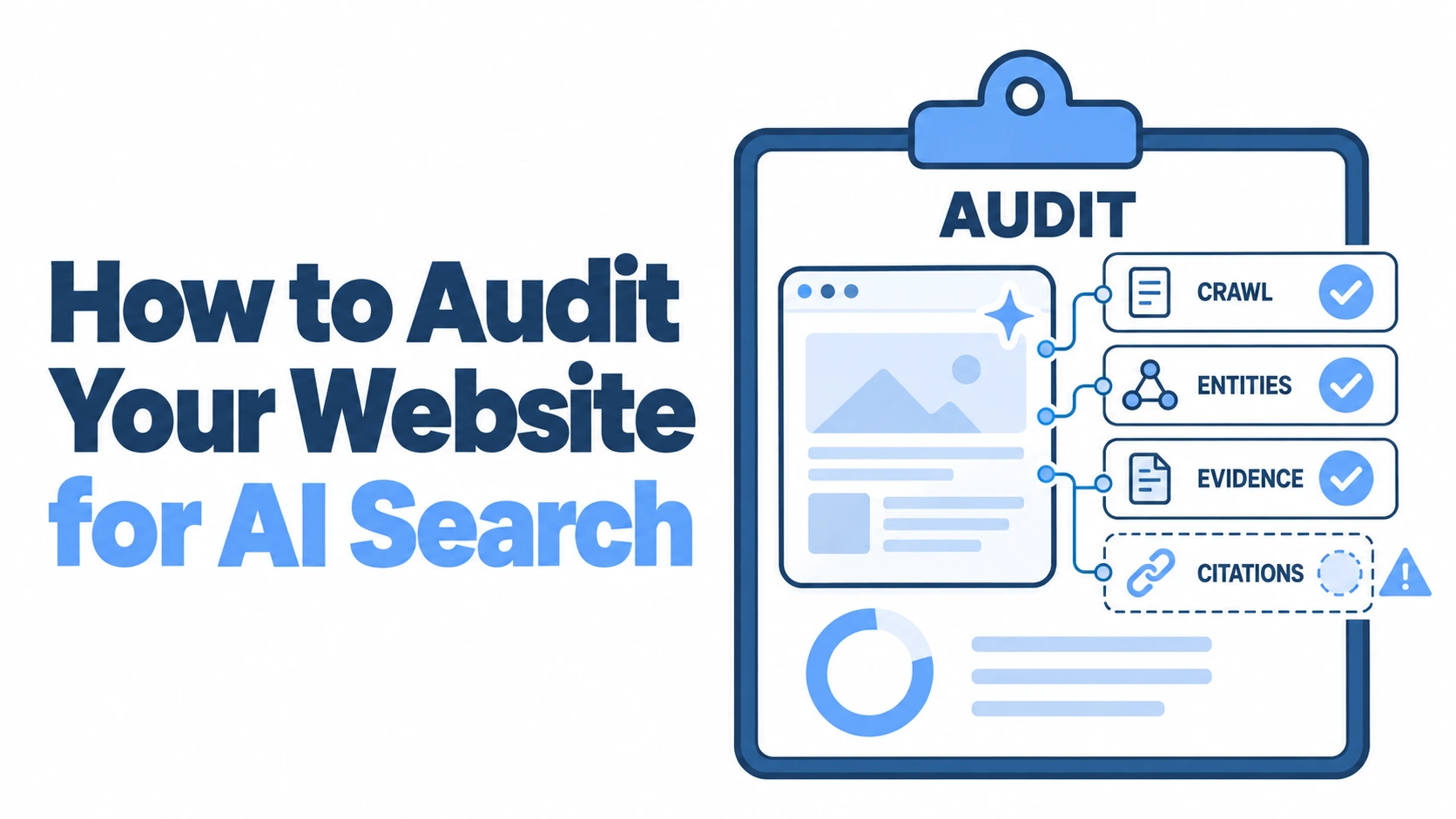
Start by auditing your highest-traffic pages against the query patterns described above. If users are arriving through complex, specific queries but finding generic content, you’re losing them. Create content that mirrors the depth and structure these users expect: clear steps, specific parameters, and explicit context matching.
Build content clusters that anticipate iterative query chains. If someone searches for a foundational concept, make sure your site offers the natural follow-up content they’ll look for next. Internal linking between these pieces keeps AI-influenced users on your site through their entire research sequence.
Format matters too. Users trained by AI expect scannable, well-organised content with clear headings, numbered steps where appropriate, and direct answers positioned early in the page. This doesn’t mean dumbing things down: it means respecting your reader’s time and expectations.
Finally, monitor your AI referral traffic monthly. The platforms sending you traffic will shift as new tools emerge and existing ones change their citation behaviour. Staying current with these referral patterns ensures your strategy adapts alongside the technology shaping how people search.
The ability to recognise and respond to AI-driven search queries separates reactive content teams from proactive ones. The signals are already in your data: query length, linguistic complexity, referral sources, and behavioural patterns all point to a growing segment of users whose expectations have been permanently reshaped. Start by auditing your current query data against the markers outlined here, and build your content roadmap around what you find. The teams that treat this as a priority in 2026 will own the traffic that others don’t even realise they’re missing.