Skip to content

You're probably here because you've had a look at a few SEO quotes and now you're more confused than when you started. One package says “starter SEO”, another promises page one, another bangs on about authority and backlinks like it's reading from a spell book. Meanwhile, you just want the phone to ring, the enquiry form to ping, and your website to stop acting like a very expensive brochure no one sees.
That's the core issue with shopping for an SEO package in the UK. Most of the market talks about tasks. Business owners care about outcomes. A roofer in Reading doesn't need “twelve deliverables”. He needs more quote requests. A solicitor in Sheffield doesn't need a mystery bundle. She needs qualified enquiries from the right areas. And in 2026, that also means thinking beyond old-school blue links and asking whether your SEO package gives you a shot at visibility in AI-driven search results too.
Table of Contents
- So You Need an SEO Package What Now
- What on Earth Is an SEO Package Anyway
- Unpacking the Tiers From Budget to Baller
- The Local SEO Golden Ticket Google Business Profile
- How to Spot a Winner from a Dodgy Dealer
- Is Your SEO Package Ready for the AI Revolution
- Your Next Steps to SEO Success
So You Need an SEO Package What Now
Let's make this painfully familiar.
You run a good business. Maybe you're a baker in Brighton making lovely custom cakes, or a heating engineer in Telford who turns up when promised, which already puts you ahead of half the market. You know word of mouth helps, but you also know loads of customers now start with Google. So you search for an SEO package UK, hoping for clarity. Instead, you get a buffet of nonsense.
One quote is cheap enough to seem suspicious. Another costs more than your van payment. A third says it'll “increase domain authority through synergised technical implementation”, which sounds impressive until you realise it tells you absolutely nothing.
Practical rule: If an SEO quote makes less sense than your insurance paperwork, stop and ask better questions.
Here's the straight answer. You don't buy an SEO package because you want SEO. You buy it because you want a business outcome. More calls. Better leads. More booked jobs. Better visibility in the towns you serve. If the package isn't tied to that, it's just admin with a logo.
That's why smart local firms now judge SEO the same way they judge any lead channel. Does it produce work, and can you see how it's supposed to do that? If you're comparing channels, this piece on HomeProBadge's organic lead generation is useful because it frames search visibility around actual inbound leads rather than vanity metrics.
A decent package should feel like a plan. A dodgy one feels like someone stuffed a list of buzzwords into a PDF and hoped you wouldn't ask awkward questions. Fair enough. Most owners are busy. But if you know what outcome you need, the fog starts to clear very quickly.
What on Earth Is an SEO Package Anyway
It's a monthly growth service, not a magic button
An SEO package isn't a product sitting on a shelf. It's not like buying a drill bit from Screwfix and being done with it. It's a monthly service agreement built around improving your visibility over time.
Consider a gym membership with a good coach. You're not paying for one pep talk and a laminated diet sheet. You're paying for ongoing work, regular adjustments, and someone keeping the plan aligned to the goal. Same with SEO. The useful work happens month after month.

A technically credible UK SEO package should begin with a technical audit plus keyword research, then add schema markup, internal linking, index management, and mobile optimisation because those jobs sort crawlability, relevance, and site quality before anyone starts churning out content or chasing links, as outlined in ClickExpose's overview of SEO package components.
That matters because loads of small businesses are sold the sexy bits first. Blog posts. Backlinks. “Content velocity.” Lovely words. Useless if your service pages are weak, your site structure is a mess, and Google can't properly understand what you do and where you do it.
White hat, grey hat, black hat
Not all SEO is built the same. You need to know the difference, because the hat colour tells you whether you're buying real work or playing digital roulette.
- White hat means clean, sustainable SEO. Better service pages, proper internal links, schema, useful content, strong Google Business Profile work, earned links, tidy technical foundations. It's slower than nonsense promises, but it lasts.
- Grey hat sits in the murky middle. It often includes tactics that aren't obviously daft, but feel engineered to game the system. It can work for a while. It can also blow up awkwardly.
- Black hat is the stuff that gets sold by people who say “trust me” far too often. Spammy links, doorway pages, copied content, review manipulation, fake locations. It's the digital equivalent of queue-jumping at Alton Towers. You might get ahead for a minute, then security clocks you and your day goes sideways.
Good SEO should be explainable in plain English. If the provider gets twitchy when you ask how links are built or content is created, that's not sophistication. That's a warning light.
A proper SEO package UK setup is boring in the best way. It's organised, measurable, and tied to work that improves your site and local visibility without flirting with penalties.
Unpacking the Tiers From Budget to Baller
You ring an SEO agency, they offer Bronze, Silver, Gold, and suddenly you're comparing spreadsheets instead of asking the only question that matters. What result is this package supposed to produce for the business?
That's the right way to judge SEO package UK pricing now. Especially with AI Overviews eating clicks for flimsy sites and vague content. A modern package has to do more than “get rankings”. It needs to help you win enquiries, calls, bookings, and branded searches by building pages Google can trust enough to cite, summarise, and surface.
For small businesses in the UK, monthly SEO services often start around £300, with a typical recommended spend for local SEO between £500 and £3,000 per month, according to Polaris's UK SEO pricing guide. Larger multi-site or broader campaigns can hit £10,000+ per month. Fine. That gives you the range. It does not tell you what you should buy.
Three package types that actually make sense
Forget the shiny tier names. Buy for the outcome.
Foundational is for businesses that need the site to stop underperforming and start bringing in leads from one core area. One town, one main service set, one clear target. A locksmith in York, a dog groomer in Derby, a physio in Exeter. The job here is getting the basics right so Google understands the business, trusts the core pages, and can surface them in local results and AI summaries.
Authority is for firms that want more reach and more trust, not just a tidy website. Maybe a dentist targeting several nearby towns, or an accountancy practice that wants better quality enquiries across a wider catchment. This level should improve topical depth, build stronger internal linking, expand service and location coverage, and create the kind of expert content AI systems are more likely to reference. If you run a consultancy, legal firm, accountancy practice, or similar, this is the point where a specialist approach to SEO for professional services starts to matter.
Market Leader is for businesses trying to own a region, multiple branches, or several service lines at once. Solicitors with more than one office. Home service firms rolling across a county. Dental groups. This package needs proper coordination across locations, tighter reporting by service line, and a content operation built around commercial topics, not blog filler.
One blunt rule. If the provider cannot explain which business outcome each tier is designed to achieve, they're selling boxes, not strategy.
Typical SEO Package Inclusions by Tier
| Service | Foundational (£300-£700/mo) | Authority (£700-£2000/mo) | Market Leader (£2000+/mo) |
|---|---|---|---|
| Technical audit | Basic audit and fixes | Deeper audit with ongoing issue tracking | Full technical oversight across larger site sections |
| Keyword research | Core service and local terms | Broader keyword sets with intent mapping | Full service, location, and competitor coverage |
| Service page optimisation | Main money pages | Main pages plus supporting pages | Full service architecture and page expansion |
| Google Business Profile work | Setup or optimisation | Ongoing optimisation and updates | Multi-location profile management |
| Local landing pages | Limited | Regular creation or improvement | Scaled location strategy |
| Content production | Light and focused | Consistent publishing | Heavier content programme tied to authority and coverage |
| Internal linking | Basic clean-up | Planned linking across service and content pages | Site-wide internal link strategy |
| Schema and index management | Core implementation | Expanded implementation | Ongoing refinement and testing |
| Link building | Light outreach or citation-focused work | Steady authority work | More aggressive but still clean authority development |
| Reporting | Monthly summary | Monthly reporting with clearer lead focus | Detailed reporting by service and location |
The table helps, but do not get hypnotised by deliverables. Ten blogs a month means nothing if they never touch your money pages. “Link building” means nothing if it's junk from rubbish sites. “AI-ready content” means absolutely nothing unless the agency can show how they structure service pages, FAQs, entity signals, author credibility, and internal links so your site becomes easier for search engines to trust and summarise.
That's where a lot of small firms get rinsed.
A builder serving one town does not need the same setup as a multi-office legal firm. A dental group trying to increase treatment enquiries across several locations needs something very different again. For a practical example of how visibility connects to patient growth, the LeadBlaze guide to increasing dental patients is useful because it ties search activity back to actual commercial outcomes.
Content spend matters too. The same Polaris analysis notes that businesses are often investing heavily in content marketing alongside SEO work. Fair enough. That only pays off when the content supports service pages, local intent, and trust signals that can survive AI Overviews pinching basic informational clicks.
My advice is simple. Buy the cheapest package that can realistically hit your next business goal, then make sure it includes the groundwork for AI search. If your provider is still selling SEO like it's only ten blue links and a monthly ranking report, they're already behind.
The Local SEO Golden Ticket Google Business Profile
If you're a local service business, the money resides here.

Why the map pack matters more than ego rankings
Loads of owners get hung up on “ranking number one”. Fair enough. It sounds nice. But for many service searches, the main prize is the map pack, not the bragging rights.
If someone searches for “emergency plumber near me” at half ten on a wet Tuesday night, they don't want your latest blog post about boiler efficiency. They want a nearby business with a phone number, reviews, opening hours, and a map pin. Fast.
That's why local SEO isn't optional. Birdeye notes that 46%+ of UK Google searches have a local angle, and businesses appearing in local results can see up to 126% more search traffic per location, according to its local SEO services UK guide. Those aren't vanity numbers. They point to buyer behaviour.
A lot of practices outside the trades have the same issue. Dentists are a great example. If you want a practical view of how search visibility connects to appointment growth, this LeadBlaze guide to increasing dental patients is worth a read because it shows how local intent and trust signals shape demand.
What a proper local package should do
A proper local package should obsess over your Google Business Profile. Not mention it in passing. Obsess over it.
That means:
- Category accuracy: Your primary and secondary categories need to match what you want to rank for.
- Service setup: Services should be listed properly, not left half-empty like a pub menu after Sunday lunch.
- Photo and update cadence: Fresh images, posts, and business updates help keep the profile active and useful.
- Review strategy: You need a repeatable process for asking, collecting, and replying to reviews.
- NAP consistency: Your name, address, and phone details should match across key listings.
- Location relevance: If you cover several towns, your site and profile setup should reflect that without resorting to spammy fake pages.
For firms in legal, financial, and consultancy spaces, that local visibility still matters, but the website content and service architecture also need to do more of the heavy lifting. If you're in that bracket, this overview of SEO for professional services gives a decent sense of how local intent and service-led content fit together.
Here's a useful walkthrough of profile optimisation in practice:
If your SEO package barely mentions Google Business Profile and you rely on local customers, you're not buying a growth plan. You're buying half a job.
How to Spot a Winner from a Dodgy Dealer
This is the part where you stop being the person getting pitched to and start being the one doing the interviewing.
Modern UK SEO packages have moved from one-off jobs to structured monthly services, and one very good sign is a provider who starts with an in-depth audit. Solve Web Media lists audits from £590 + VAT to £1,695 + VAT, which is a helpful benchmark because it shows serious SEO starts with diagnosis, not chest-thumping promises, as seen in its SEO packages and audit pricing page.
Green flags worth paying for
You don't need to be an SEO nerd to ask smart questions. You just need to listen for sane answers.
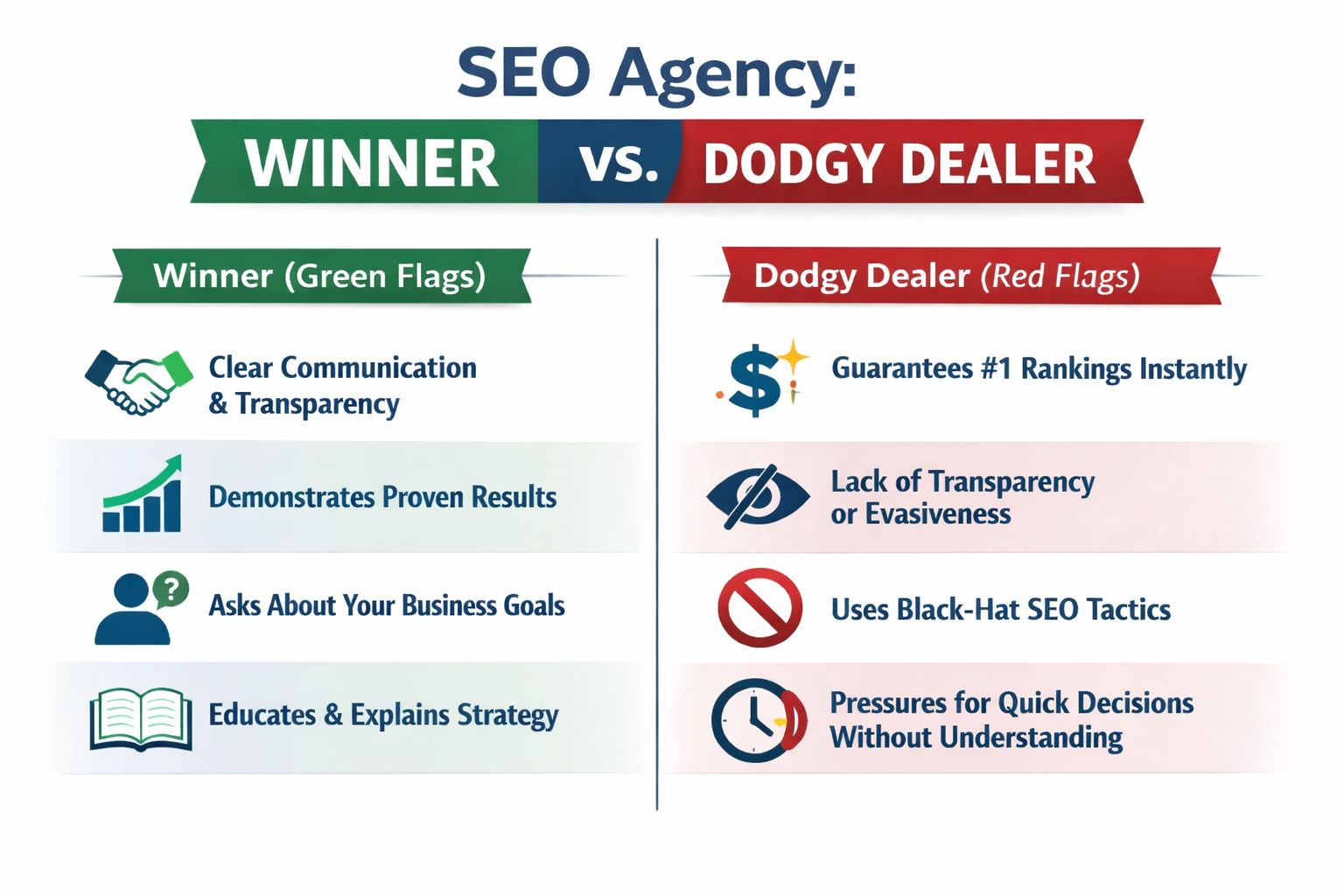
- Ask how success is measured. The right answer should include leads, calls, enquiries, visibility for priority services, and progress by location if you serve more than one area.
- Ask what the first month looks like. Good providers usually begin with auditing, research, and priorities. They don't open with “we'll build loads of links”.
- Ask to see a reporting example. If the monthly report can't be understood by a business owner, it's built to impress the provider, not help the client.
- Ask how link building works. Clean answers mention relevance, quality, editorial logic, and caution. Dirty answers sound like they came from a bloke selling watches in a pub car park.
- Ask what happens if the strategy needs to change. Good SEO isn't static. It adapts to what the site, market, and search results are doing.
One sensible option in the market is DigiVisi Ltd, which offers monthly SEO packages for small service-led businesses and includes technical, on-page, off-page, local SEO, reporting, and AI exposure work in its service model. That's not a recommendation to stop shopping around. It's just an example of what a clearly defined, process-led package looks like.
Red flags that should send you running
Now for the fun bit.
“Guaranteed number one rankings” is not confidence. It's either ignorance or sales patter.
Watch for these:
- Guaranteed rankings: No one controls Google. Anyone claiming otherwise is either naive or taking you for a ride.
- Secret methods: If they can't explain the strategy in plain English, assume the plain English version sounds bad.
- One-size-fits-all packages: A local electrician and a multi-branch law firm do not need the same campaign.
- No audit, no diagnosis: Prescribing before checking the patient is lazy.
- Contract pressure from day one: If they're desperate to lock you in before proving anything, ask yourself why.
- Black-hat hints: Fake reviews, fake locations, spammy links, spun content, cloned pages. Cheap shortcuts often become expensive clean-ups.
The best SEO conversations feel calm, specific, and practical. The worst feel like a timeshare pitch with added acronyms.
Is Your SEO Package Ready for the AI Revolution
Search is changing, and too many SEO packages are still selling 2019 with a fresh haircut.

Ranking is no longer the whole game
A key unanswered question for UK businesses is how SEO packages prepare them for AI Overviews. Rapid SEO's guidance notes that local campaign pricing starts from about £300 to £500, but also points out that few package pages explain how they'll earn visibility in AI-generated summaries rather than only traditional rankings, as discussed in its write-up on SEO packages.
That's the shift. Old SEO thinking asks, “Can you get me higher in Google?” Fair question. A better one now is, “Can you help my business become a source Google and AI systems want to cite, summarise, or surface?”
That changes what a modern package should prioritise. You need well-structured service pages, strong entity signals, schema markup, clear authorship, topical depth, and content that answers real buyer questions cleanly. Thin waffle written just to tick a keyword box won't cut it.
If you sell products rather than services, the same shift is happening there too. This piece on AI search for ecommerce is a handy example of how search visibility is broadening beyond the old ten blue links.
What to ask before you sign anything
Ask these three questions and listen carefully.
How does this package improve my visibility beyond standard rankings?
If they look puzzled, that's not brilliant.What are you doing to make my site understandable to search engines and AI systems?
The answer should touch structure, schema, internal links, content clarity, and authority.How will reporting reflect that shift?
If reporting only talks about a handful of keyword positions, it's too narrow.
A future-ready SEO package UK plan should still handle the basics properly. But it also needs to prepare your business for a world where customers may get answers before they ever click a website. If your provider isn't thinking about that, they're already behind.
Your Next Steps to SEO Success
A good SEO package should help your business win more of the right work. That is the decision.
Start with the result you want over the next 6 to 12 months. More booked jobs. Better quality enquiries. More visibility in the towns that pay the bills. More trust signals that help your business show up in search results, map packs, and AI-generated answers. Then pick the package built for that job.
Be blunt when you speak to providers. Ask how their work will turn into revenue, not activity. If the pitch is full of audits, dashboards, and ranking charts but light on leads, sales, and visibility in AI Overviews, leave them to it. You are buying business growth, not a monthly bundle of SEO chores.
One simple rule sorts the good from the rubbish.
Choose the provider who can explain three things in plain English: what they will fix first, why it matters to your sales, and how they will prepare your site to be cited and surfaced as search changes. If they can't do that without hiding behind jargon, they are not the right fit.
You do not need fireworks. You need a plan that fits your business, earns trust, and keeps working as Google sends more answers straight to the page.
If you want a straightforward second opinion on your current SEO package, or you want a no-fluff view of what a sensible plan should look like for your business, have a look at DigiVisi Ltd. They focus on UK service-led firms, explain their process clearly, and offer monthly SEO without locking businesses into long contracts.