Skip to content
You've done the obvious bits. You claimed your Google Business Profile, added a phone number, maybe uploaded a logo, then waited for the phone to ring.
Meanwhile, the bloke across town with a slightly worse van, a shakier website, and somehow far more visibility keeps showing up above you on Google Maps. He gets the calls. You get the leftovers. It's enough to make anyone mutter into their tea.
For a small UK service business, Google Maps isn't just a pin on a screen. It's where people decide who to call when the boiler's gone, the gutters are leaking, or the garden looks like it lost a fight with February. If you want to learn how to rank higher on Google Maps, you don't need magic. You need a clean system, a bit of patience, and the discipline to avoid the daft shortcuts that get businesses suspended.
A lot of generic local SEO advice comes from a US perspective and skips the practical UK bits. That's not much use if you're a locksmith in Leeds, a solicitor in Canterbury, or a cleaner in Croydon trying to sort Yell listings and postcode formatting. If you want a broader comparison point, this Australian guide to local SEO is a handy read because the fundamentals travel well, even if the directory environment doesn't.
Table of Contents
- Beyond Just a Pin on the Map
- Your Google Business Profile Is Your Digital Shopfront
- Building a Rock-Solid Reputation with Reviews and Citations
- Aligning Your Website with Your Local Ambitions
- Advanced Signals That Separate the Pros from the Amateurs
- Your Continuous Journey to the Top of the Map
Beyond Just a Pin on the Map
A Sheffield plumber finishes a callout, checks his phone, and sees a rival above him on Google Maps again. Same city. Similar services. Often weaker workmanship, if we're being honest. Yet the other firm gets the click because it looks easier for Google to trust and easier for the customer to choose.
That is the main objective with Google Maps SEO. It is not about dropping a pin and hoping for the best. It is about sending the right local signals so Google can match your business to nearby searches with confidence.
For a small UK service business, that matters because local search traffic turns into calls fast. Someone searching for an emergency electrician in Bristol or a boiler repair company in Glasgow is rarely doing academic research. They want a number to ring, a business that looks legitimate, and proof that the firm serves their area properly. If you want a second perspective outside the UK angle, this Australian guide to local SEO covers similar local intent patterns from another market.
The prize is the local 3-pack. Those three map listings often get judged before a searcher visits a single website. If you appear there, you make the shortlist. If you sit below it, you are relying on a customer to keep scrolling, which plenty will not.
Google is not measuring your workmanship directly. It is measuring whether your business looks established, relevant, and consistent. That means your details need to line up across places like Yell and Thomson Local, your service areas need to make sense, and your wider web presence needs to back up what your listing claims.
This is also where small firms get led up the garden path by bad advice. White hat local SEO is steady and boring in the best possible way. Accurate business details, real reviews, sensible categories, proper local pages, and citations on credible directories. Grey hat tactics push things too far, such as stuffing service areas or stretching categories to chase extra visibility. Black hat tactics, fake reviews, keyword-stuffed business names, and throwaway spam listings, can produce a short-lived bump and a much longer headache.
The sensible approach is to build something Google does not need to second-guess. That gives honest local businesses a route to compete without playing silly beggars.
Your Google Business Profile Is Your Digital Shopfront
A householder in Leeds searches “garden maintenance near me” at half seven, tea in hand, and glances at the map results before your website even gets a sniff. If your profile looks tidy, complete, and believable, you are in the running. If it looks neglected, you have made the decision easier for someone else.
Your Google Business Profile, or GBP, does a lot of heavy lifting for small UK service businesses. It shows what you do, where you work, when you are open, how people contact you, and whether the business looks active. For plenty of searches, that is enough for someone to call, request directions, or move on.
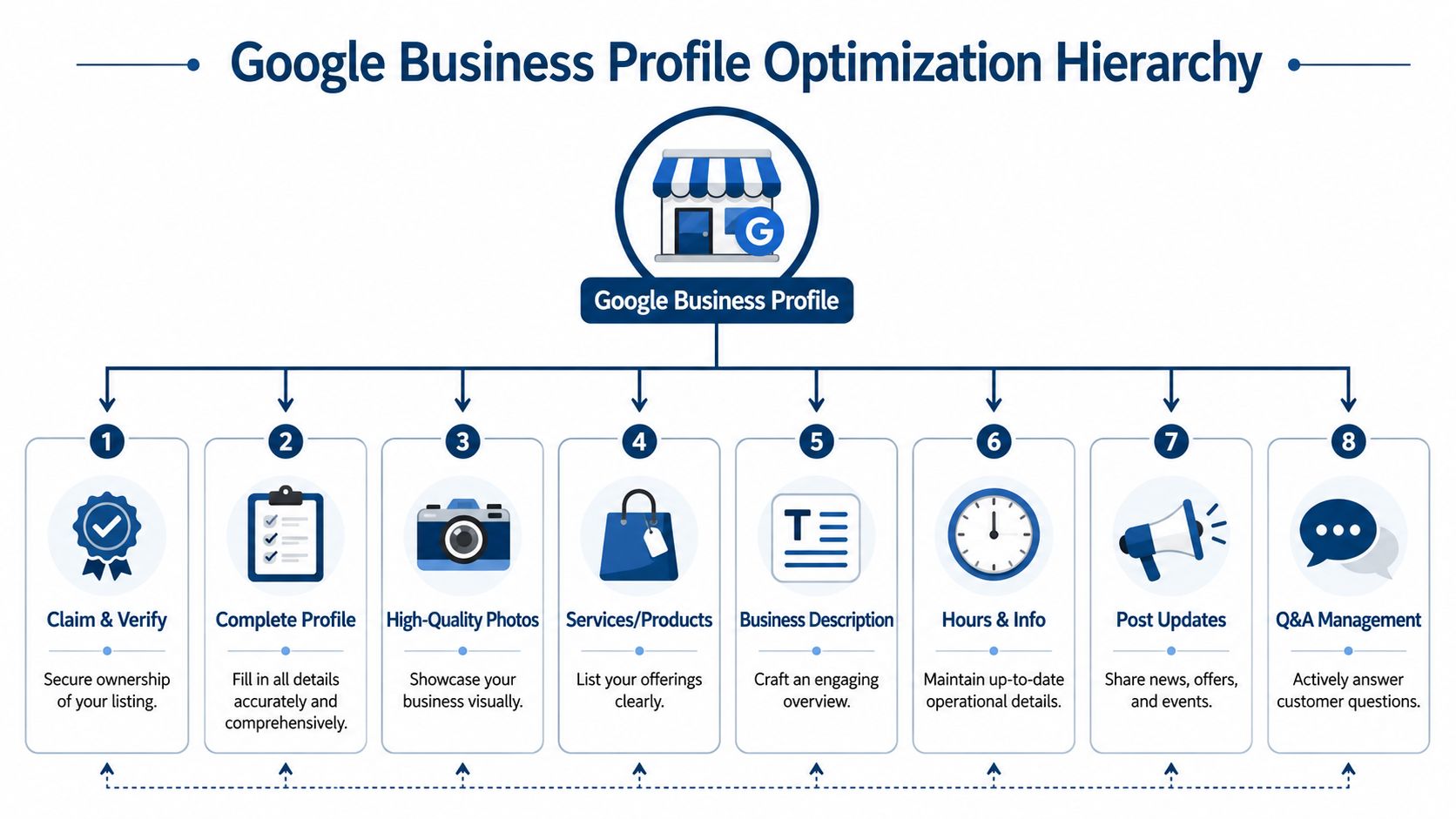
Start with the fields Google uses to understand the business
Take a gardener in Leeds. If the bread-and-butter work is garden maintenance, that should usually lead the setup. If the firm mainly sells higher-value design and build projects, the primary category needs to reflect that instead. Category choice is not a box-ticking job. It shapes which searches you are eligible for, so picking the broadest or fanciest option can cost you.
Get the core setup right first:
Claim and verify the profile
Ownership comes before optimisation. Without it, you cannot control edits properly, and fixing problems turns into a chore.Use your actual business name
“Greenstone Landscaping Ltd” is fine. “Greenstone Landscaping Ltd Leeds Patios Fencing Driveways” is asking for trouble. Keyword stuffing the business name is black hat. It may lift visibility for a while, but edits, suspensions, and customer scepticism are the usual bill that arrives later.Match your business details everywhere they matter
Your name, address, and phone number should match your website and trusted UK directories such as Yell and Thomson Local. Small inconsistencies are common, but too many create confusion, especially if old phone numbers or trading styles are still floating about.Add services with some granularity
“Landscaping” is vague. “Patio installation”, “turfing”, “fencing”, and “garden maintenance” give Google and searchers a clearer picture of what you sell.Write a business description like a normal person
Say what you do, where you work, and who you help. A solid Leeds example might mention domestic garden projects in Horsforth, Roundhay, Chapel Allerton, and nearby areas. Repeating “Leeds gardener” every other line makes the profile read like it was written by a robot with a head injury.
If you manage several locations, or you are trying to keep posts, edits, and updates under control, LocalHQ GBP management tools can help keep the admin sane.
A short video walkthrough can help if you prefer to see the moving parts in action.
Use photos and activity to prove the business is real
A neglected profile with two grainy van shots does not inspire much confidence. Real photos do. They help prospects judge whether you look established, and they give Google fresher signals that the listing is alive.
For a service business, aim for a practical mix:
| Photo type | Simple example |
|---|---|
| Exterior shots | Your shopfront, office entrance, van outside premises |
| Interior shots | Reception, workshop, treatment room, office |
| Service photos | A roofer mid-job, a solicitor's meeting room, a gardener laying turf |
| Team photos | Owner, office staff, engineers, installers |
| Before-and-after | Patio cleaning, bathroom fitting, hedge reduction |
Use real images from real jobs in the places you serve. Skip stock photography, twenty versions of the logo, and blurry snaps taken through a wet windscreen.
Keep the profile active, but keep it useful. Post when there is a proper update. New service area. Bank holiday hours. A recently completed project. A seasonal offer if it is genuine. Daily motivational fluff is wallpaper.
The Q&A section is worth setting up too, because it lets you answer the practical questions people ask before they ring. Add common ones yourself and answer them clearly:
- Do you offer emergency call-outs? State the hours and coverage area.
- Do you cover surrounding villages? Name them plainly.
- Do you provide free quotations? Say how people can book.
Reviews support this profile work, but they are a separate job in their own right. If you want a simple process for collecting them consistently, this guide on how to get more Google reviews for a local business will help.
White hat GBP work is not glamorous. It is accurate categories, honest business details, proper services, real photos, and sensible updates. Grey hat work starts bending the truth. Black hat work invents it. For a small UK service business that wants steady enquiries rather than a suspension notice, the boring route usually wins.
Building a Rock-Solid Reputation with Reviews and Citations
A local business can look tidy on Google and still lose work if the proof around the web is patchy. A smart profile gets you in the conversation. Reviews and citations help you win it.
For a small UK service business, local SEO stops being theory and starts looking like real trust. A heating engineer in Stockport, a roofer in Swansea, a locksmith in Croydon. They all need the same thing. Clear evidence that real customers use them, rate them, and can find the same business details wherever they look.

Reviews prove you do the job properly
Reviews influence two audiences at once. Prospects read them to decide whether to ring. Google reads the pattern around them to judge whether your business is active, credible, and getting genuine customer feedback.
The trade-off is simple. A review strategy done properly takes a bit of discipline. Done badly, it looks spammy, gets ignored, or lands you with filtered reviews that never show.
The practical approach is straightforward:
Ask after a good outcome
Timing matters more than scripts. Ask once the job is finished and the customer is happy. For a pest control company, that might be after the follow-up visit. For a bathroom fitter, it is usually when the client has seen the final result and paid the balance.Send the link directly
Text message usually works best for many trades. Email can work for solicitors, accountants, and other service firms with a longer customer journey. Either way, remove friction.Reply like a real person
Thank them, mention the service naturally, and keep it specific. A short reply that confirms “boiler repair in Stockport” or “end of tenancy clean in Reading” is useful. A copy-and-paste “we value your custom” job is wallpaper.
If you want a repeatable process, this guide on how to get more Google reviews for a local business covers the nuts and bolts.
Negative reviews need adult handling. A defensive public row makes you look harder to deal with than the original complaint ever did. A calm response shows judgement, and that matters more than winning the comment thread.
A solid template is:
Thanks for the feedback. I'm sorry the experience fell short. We take complaints seriously and would like to review what happened properly. Please contact us directly so we can put this right.
That will not rescue every situation. It does show future customers that you are sensible, which is half the battle online.
There is also a practical link between lead handling and review growth. Firms that miss evening calls often lose the enquiry before any work happens, which means there is no happy customer to ask later. If a lot of your leads come in after 5pm, the options in Expressify AI after-hours service are worth a look.
Citations help Google trust your details
Citations are mentions of your business name, address, and phone number on other websites. In the UK, the useful ones are usually established directories and relevant trade platforms, not some mystery site with twelve visitors a month and a logo from 2009.
For many small service businesses, the first places to check are Yell, Thomson Local, FreeIndex, Bing Places, Apple Business Connect, and any trade-specific directory your customers use. A NICEIC electrician, Checkatrade member, or rated builder may have industry listings that carry more weight than a pile of generic directory submissions.
Consistency matters because Google is trying to match one real business across multiple sources. If your website says one thing, Yell says another, and Thomson Local says something else again, confidence drops.
A simple example shows the problem:
| Listing location | Business name shown | Why it's a problem |
|---|---|---|
| Website | Anytown Plumbers Ltd | Official version |
| Yell | Anytown Plumbers | Missing “Ltd” |
| Thomson Local | Anytown Plumbing Ltd | Different business wording |
| FreeIndex | Anytown Plumbers Leeds | Keyword-stuffed variation |
One mismatch will not always cause trouble. A messy trail across half a dozen sites can.
The white hat route is boring, which is usually a good sign. Audit existing listings. Pick one standard version of your business details. Correct the major platforms first. Add relevant citations over time.
The black hat route is the usual nonsense. Buying hundreds of low-grade citations, stuffing town names into the business title, or creating duplicate listings for places you do not operate from. That can create a short bump in some cases. It can also create a larger mess to clean up later, especially if a Google Business Profile suspension gets involved.
A sensible citation routine looks like this:
Audit before adding anything new
Search your business name, old phone numbers, postcode variants, and trading name abbreviations.Fix the important UK directories first
Start with Yell, Thomson Local, and the trade or local directories that matter in your market.Standardise your NAP format
Use one business name, one main phone number, and one address format everywhere.Remove junk and duplicates where possible
An old listing with the wrong mobile number is worse than no listing at all.Add citations selectively
A handful of trusted, relevant listings beats a weekend spent spraying your details across rubbish sites.
For local SEO, reviews and citations are not glamorous jobs. They are trust signals. Get them right, and Google has fewer reasons to hesitate. More importantly, customers have fewer reasons to choose the firm down the road.
Aligning Your Website with Your Local Ambitions
A common small-business problem goes like this. The Google Business Profile says “emergency plumber in Leeds”, but the website talks like a generic national brand, with vague service copy, no proper local landing pages, and a contact page that barely says where the firm is based. Then the owner wonders why the map pack will not budge.
Google uses your website to sense-check your local story. If the site backs up your service area, your main services, and your business details clearly, your profile has firmer ground under it. If the site is muddled, rankings usually follow suit.
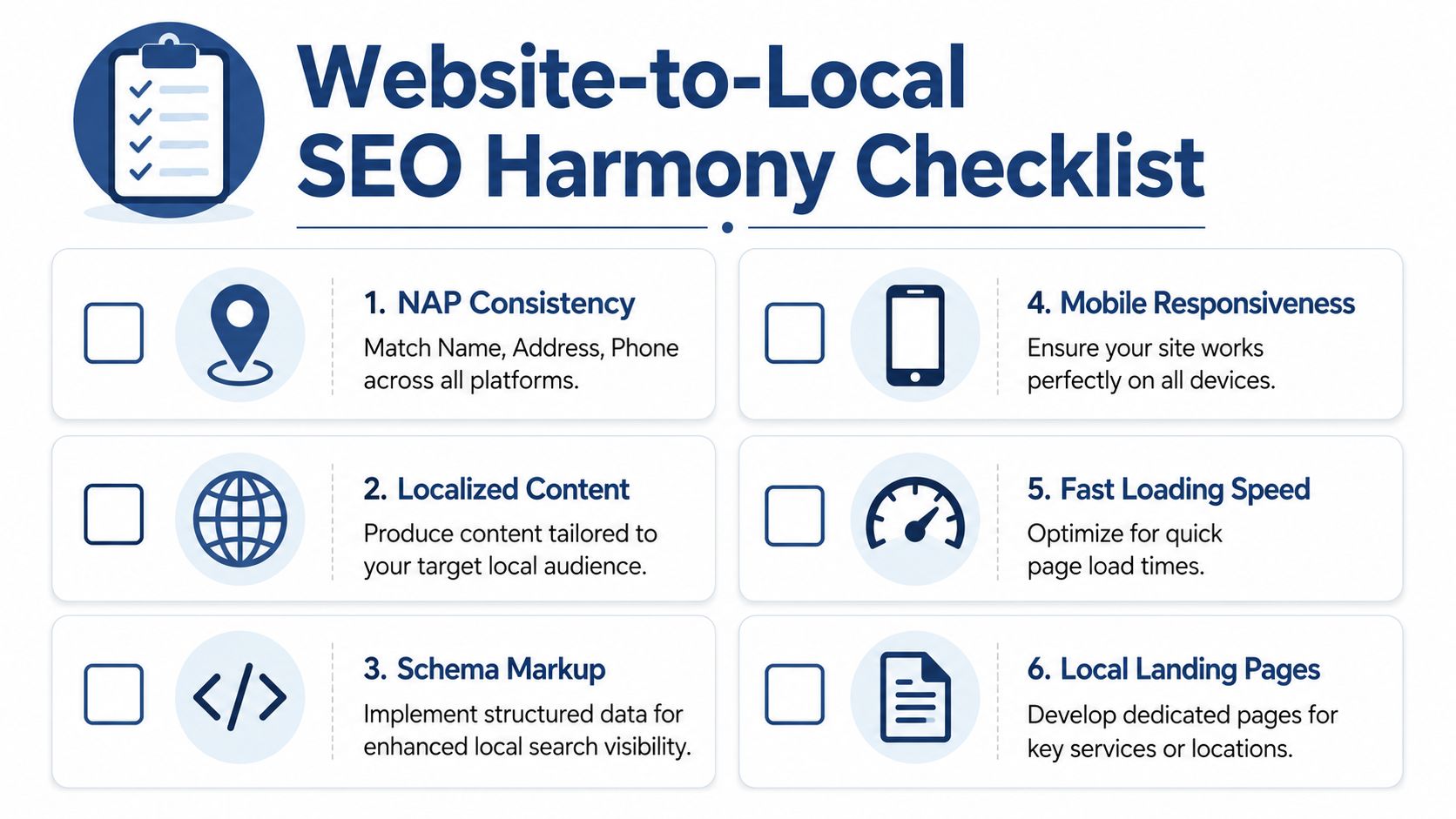
Build pages that match real searches
For a UK service business, one catch-all services page is rarely enough. A locksmith in Sheffield, a roofer in Reading, and a heating engineer in Canterbury each need pages that line up with the jobs people search for.
Start with service pages. Boiler repair, boiler installation, power flushing. Then add location pages where there is a genuine business case and real operational coverage. Boiler repair in Maidstone. Boiler repair in Ashford. Boiler repair in Canterbury.
The trade-off is simple. More pages can give you better local reach, but only if the pages are useful. Swapping town names into the same limp paragraph is risky, and for service businesses in competitive UK markets, it is one of the fastest ways to build a site full of near-duplicates that rank poorly and convert even worse.
A location page should earn its place. Include the service details, the areas covered, the kinds of properties you work on, common call-out issues, and what happens next if someone gets in touch. Add local context where it is natural. A Manchester electrician might mention terrace rewires, landlord certificates, or fuse board issues in older housing stock. That is far more convincing than stuffing “electrician Manchester” into every subheading like a maniac.
A few on-page basics matter more than clever tricks:
- One page per core service
- Location pages only for real service areas
- Clear headings that describe the service and area
- A contact page with full business details
- A visible phone number and enquiry route on each key page
- Copy written for customers first, search engines second
An embedded Google Map on the contact page can help reinforce location signals for businesses with a real premises customers can visit. For service-area businesses without a public office, the better move is usually clarity. State your base, state your coverage, and avoid pretending you have offices all over the county when you plainly do not.
Use schema markup to remove doubt
Schema markup gives search engines a cleaner read on your business details. It will not rescue a weak website on its own, but it does help confirm the basics: who you are, where you are, what you do, and which areas you serve.
Skip the made-up magic. Schema is white hat, sensible housekeeping. The risky version is stuffing inaccurate details into the code, marking up locations you do not really cover, or using broken templates copied from some forum thread last updated when Theresa May was still in Number 10.
Here's a simple JSON-LD template your developer can adapt:
<script type="application/ld+json">
{
  "@context": "https://schema.org",
  "@type": "LocalBusiness",
  "name": "Example Heating Services Ltd",
  "address": {
    "@type": "PostalAddress",
    "streetAddress": "10 High Street",
    "addressLocality": "Canterbury",
    "addressRegion": "Kent",
    "postalCode": "CT1 2AB",
    "addressCountry": "GB"
  },
  "telephone": "01227 000000",
  "areaServed": [
    "Canterbury",
    "Whitstable",
    "Herne Bay"
  ],
  "hasPrecision": "service-area"
}
</script>
The code matters less than the accuracy behind it. Check these points before you publish:
| What to check | What good looks like |
|---|---|
| Name | Matches your GBP exactly |
| Address | Matches your website and directory listings |
| Phone | Same main number used consistently |
| Area served | Real towns or postcode-based service areas |
| Validation | Checked in Google's Rich Results Test |
For small UK firms, this is often where things slip. A developer pulls one phone number from the footer, another from an old contact page, then adds schema with a third version of the address. Google can handle a lot, but there is no need to make it play detective.
One more point. Service-area businesses should be especially careful with location signals. If you cover Kent from one base in Canterbury, say that plainly. Do not mark up fake branches in Whitstable, Herne Bay, and Dover just because a black hat Facebook group said it works. Sometimes it does, briefly. Then comes the suspension, the ranking drop, or the clean-up bill.
If you want help implementing this sort of on-page and local setup, providers such as in-house developer teams or SEO specialists can handle it. In the UK market, DigiVisi Ltd includes schema markup, citation fixes, and Google Business Profile optimisation as part of its local SEO work for service-led businesses.
Advanced Signals That Separate the Pros from the Amateurs
Once the fundamentals are in place, the gap between average and excellent usually comes down to signals that are harder to fake. That's where local authority, user behaviour, and disciplined maintenance come in.
This is also where people get tempted by nonsense. Buying a sackful of mystery backlinks from unrelated websites in foreign markets isn't “advanced SEO”. It's just an expensive way to make your link profile look odd.
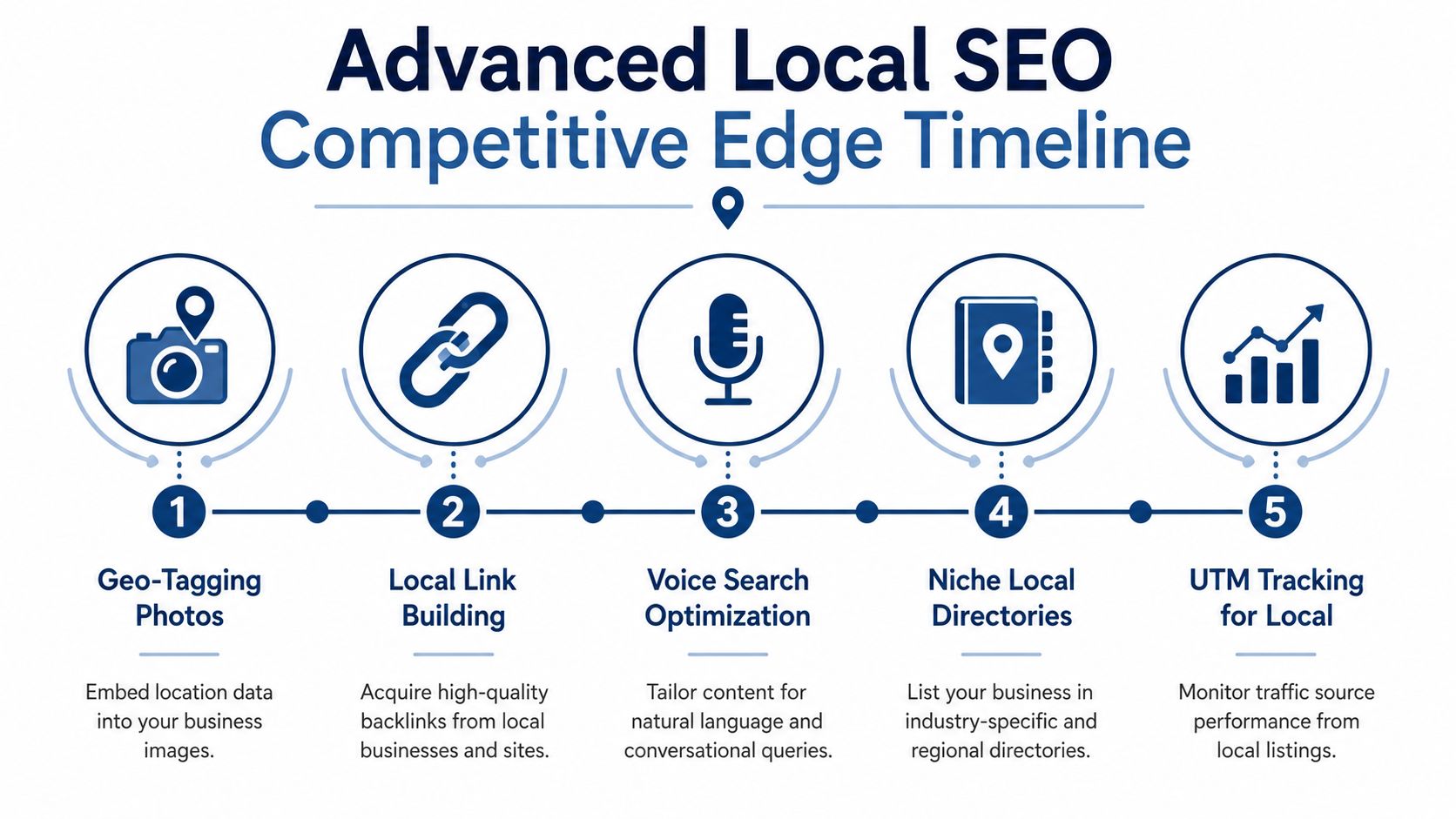
Local links beat random links
If a local business earns a mention from a parish council page, a chamber of commerce site, a nearby school sponsor page, or a respected local blog, that often carries far more local relevance than generic links from websites that have nothing to do with your area or trade.
Think of it this way. A decorator in Norwich gets one link from a Norwich community event page and one from a random coupon directory based who-knows-where. Which one supports local credibility? Exactly.
A few worthwhile local link ideas:
- Community sponsorships
Youth football clubs, charity events, school fairs. - Local partnerships
A kitchen fitter linking to a local electrician they work with often. - Neighbourhood press
Coverage for awards, expansion, charity work, or community involvement. - Trade associations and regional memberships
Relevant, legitimate, and tied to your actual business.
A good local link usually makes sense to a human before it makes sense to Google.
Grey hat link building tends to involve excessive guest posting on weak sites or swapping links in clumsy patterns. Black hat means buying links at scale, using private blog networks, or hiding link schemes behind “outreach packages”. Avoid all of it unless you enjoy future cleanup work.
A practical 90-day rhythm
The businesses that keep climbing don't treat Maps like a one-off project. They work it like a routine.
Here's a sensible 90-day rhythm for a small UK service business:
First month
Clean the foundations. Fix the Google Business Profile. Sort categories, services, hours, photos, and Q&A. Audit your existing citations and repair obvious NAP errors.
Second month
Strengthen trust. Put a review request process in place. Add missing high-quality directory listings. Build or improve location and service pages on the website. Add schema and validate it.
Third month
Push authority and behaviour. Earn a few local links. Keep publishing real photos. Track what people click, call, and ask about. Improve weak service pages based on actual enquiries, not guesswork.
There are also smaller signals worth tightening up:
| Signal | What to do |
|---|---|
| Click-to-call appeal | Use a clear local number and sharper profile wording |
| Direction requests | Add better photos of the entrance and accurate map placement |
| Conversion quality | Make landing pages answer the exact local service query |
| Ongoing freshness | Update posts, hours, and service details when things change |
You can't fake useful behavioural signals for long. But you can earn them by making the listing more compelling and the website less annoying. Low-friction user experience sounds terribly dull until you realise it often beats louder competitors.
Your Continuous Journey to the Top of the Map
Ranking well on Google Maps is rarely about one grand fix. It's the result of doing the basics better than the businesses around you, then continuing to do them after they've got distracted by something shiny.
The strongest local setups usually share the same pattern. Their Google Business Profile is complete and active. Their reviews arrive steadily and get thoughtful replies. Their name, address, and phone details stay consistent across the web. Their website supports the same locations and services instead of muddying the waters.
That's why how to rank higher on Google Maps is really a management job, not a trick. White hat work compounds because it builds trust in layers. Black hat work creates spikes, then problems. Grey hat work sits awkwardly in the middle and often turns into cleanup later.
You don't need to spend every waking hour on it. A couple of focused sessions each month can go a long way if you use them well. Update photos. Reply to reviews. Check hours. Fix new citation errors. Improve one service page. Add one local link opportunity. Keep the machine moving.
Most competitors won't do that consistently. They'll set up the profile, forget it exists, and then wonder why the quieter business down the road keeps outranking them.
That's your opening.
If you run a local service business in the UK, Google Maps can become one of the steadiest sources of qualified enquiries you have. Not because Google is generous, but because local customers need answers quickly and usually choose from a short list. Get into that list, stay there, and the phone starts behaving much more like it should.
If you want a practical hand sorting your local visibility, DigiVisi Ltd works with UK service-led businesses on Google Business Profile optimisation, local SEO, citations, schema, and service-page improvements that support better map pack visibility.