Skip to content
Sarah, a plumber in Leeds, opens Google Search Console over her morning coffee and spots an uncomfortable result. For “emergency boiler repair Leeds”, an AI Overview answers the search before the traditional listings, and a competing website is cited inside the generated response. Sarah's own emergency service page is still indexed, but it sits below the answer, unseen unless the searcher keeps scrolling.
That moment is becoming familiar to UK trades and professional firms. Google says AI Overviews provide a snapshot of key information with links to explore further, and its UK help page confirms the feature is available in the United Kingdom. Google's explanation of AI Overviews makes the commercial point clear: appearing in the classic blue links is no longer the whole visibility game.
The practical question is how to rank in AI Overviews without resorting to shortcuts. The answer isn't to fight the AI box or stuff pages with machine-written waffle. It's to make your service information useful, extractable, credible and clearly connected to a real local business. The playbook below focuses on the signals that help Google understand, trust and cite a page, then shows how to monitor that exposure while Search Console reporting remains limited.
Table of Contents
- The Local Business Wake-Up Call
- What AI Overviews Pull From the Web
- Your AI Overview Audit Checklist
- On-Page and Schema Changes That Get You Cited
- Authority Signals, Citations and llms.txt
- Measuring AI Overview Visibility in 2026
- Your 90-Day AI Overview Rollout Plan
The Local Business Wake-Up Call
A traditional SEO report might celebrate Sarah's service page reaching the first organic position. That's still valuable, but it doesn't necessarily mean the page wins the search experience. If Google places a generated answer above the listings, the user may get enough information to choose a provider, refine the question or make a decision before visiting any website.
The new finish line is therefore broader. A strong local page needs to compete for organic visibility and citation visibility. The first earns a place in the familiar results. The second gives Google a reason to use the page as supporting evidence inside its answer.
Practical rule: Don't optimise a service page only for the phrase you want to rank for. Optimise it for the questions a customer asks before they're ready to call.
For a Leeds plumber, that might mean answering what counts as a boiler emergency, what a homeowner should do before an engineer arrives, which boiler faults need immediate attention and what affects the eventual repair price. For a Bristol solicitor, it could mean explaining what happens during an initial consultation, which documents a client should prepare and when urgent legal advice is sensible.
Why the old number-one mindset falls short
AI Overviews are especially relevant to informational and advice-led searches. A UK-focused analysis found that AI Overviews appeared in 19.23% of UK Google SERPs, with an average generated answer length of 4,965 characters, while adverts appeared alongside them in 34.30% of searches. The UK AI Overview analysis shows why concise, authoritative passages matter. Google has a sizeable answer to assemble, so it needs pages with clean sections and statements it can safely cite.
The same analysis found a 50.50% trigger rate for Relationships searches and 37.48% for Business searches. These aren't direct measurements of every local trade, but they show that informational topics can be exposed to AI summarisation far more than a purely transactional page.
Earn a seat rather than obstruct the box
Google's answer panels aren't an opponent you can outbid. They're a retrieval and synthesis layer, and your job is to become a reliable source within that layer. That means publishing genuine expertise, keeping business details consistent and presenting each answer without making the reader hunt through five paragraphs of throat-clearing.
For a useful introduction to shaping content for AI-led search, these tips for ranking AI articles provide useful background. Apply the principle locally: write for a real customer in Leeds, not for a faceless algorithm wearing a hi-vis jacket.
What AI Overviews Pull From the Web
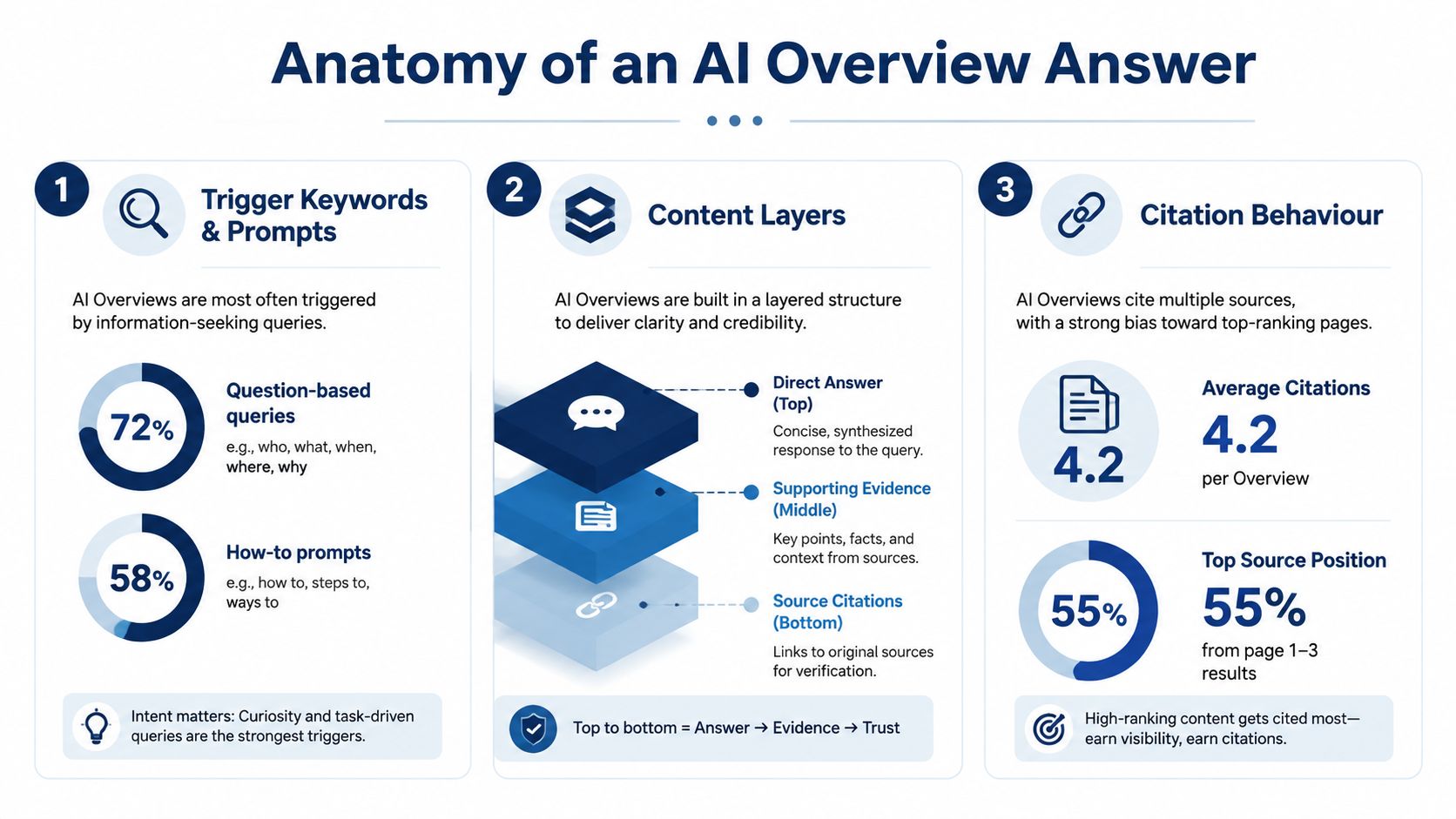
A local service page can be visible in search and still miss an AI Overview citation. Google assembles answers from several information layers, then links to pages supporting particular statements. Your page therefore needs to be discoverable, identifiable as a genuine business and written in passages that answer specific questions clearly.
The first layer is the traditional search index. Google must be able to crawl, interpret and retrieve the page for a query before it can enter the potential source pool. Organic visibility remains useful because it gives Google a dependable route to the content, although a blue-link position alone does not guarantee a citation.
The second is the entity layer. Google needs clear signals about who the business is, which services it provides and where it operates. “We help customers” provides little to work with. A stronger page names the business, lists its services and service areas, explains relevant professional credentials, and publishes consistent contact details.
The third is the extractable passage. A citation usually supports a specific part of the generated response, so write statements that can stand on their own. Clear headings, question-led subheadings, definitions, numbered processes, tables and concise explanations reduce ambiguity and make the page easier to quote.
Local intent changes the source mix
Local queries behave differently according to the searcher's intent. Independent UK guidance indicates that transactional searches such as “plumber north London” usually continue to show the Local Pack, while informational searches such as “how to find a reliable plumber in London” are more likely to trigger AI Overviews and cite articles or blog content. This UK local SEO analysis also reports AI Overviews on 20.5% of local dentist queries, showing that exposure varies by sector.
Local firms need both types of asset. Keep the Google Business Profile and NAP details accurate for direct service searches, then publish answer-led content for the research questions that come before contact. A plumber might target “emergency boiler repair Leeds” on a service page and answer “what should I do if my boiler starts leaking?” in a supporting guide. The first query is strongly transactional. The second creates room to demonstrate practical expertise.
Give Google compact evidence
A long generated answer does not require a sprawling article. Google may combine concise passages from several sources, so each passage should provide enough context and proof to support its claim. Thin listicles often leave gaps. A well-structured service page can explain the problem, identify the business and answer related questions without padding.
For a practical guide to structuring content for generated summaries, read SEO tips for AI-generated summaries. The working rule is simple: cover the customer's decision-making questions, not every vaguely related keyword.
Your AI Overview Audit Checklist
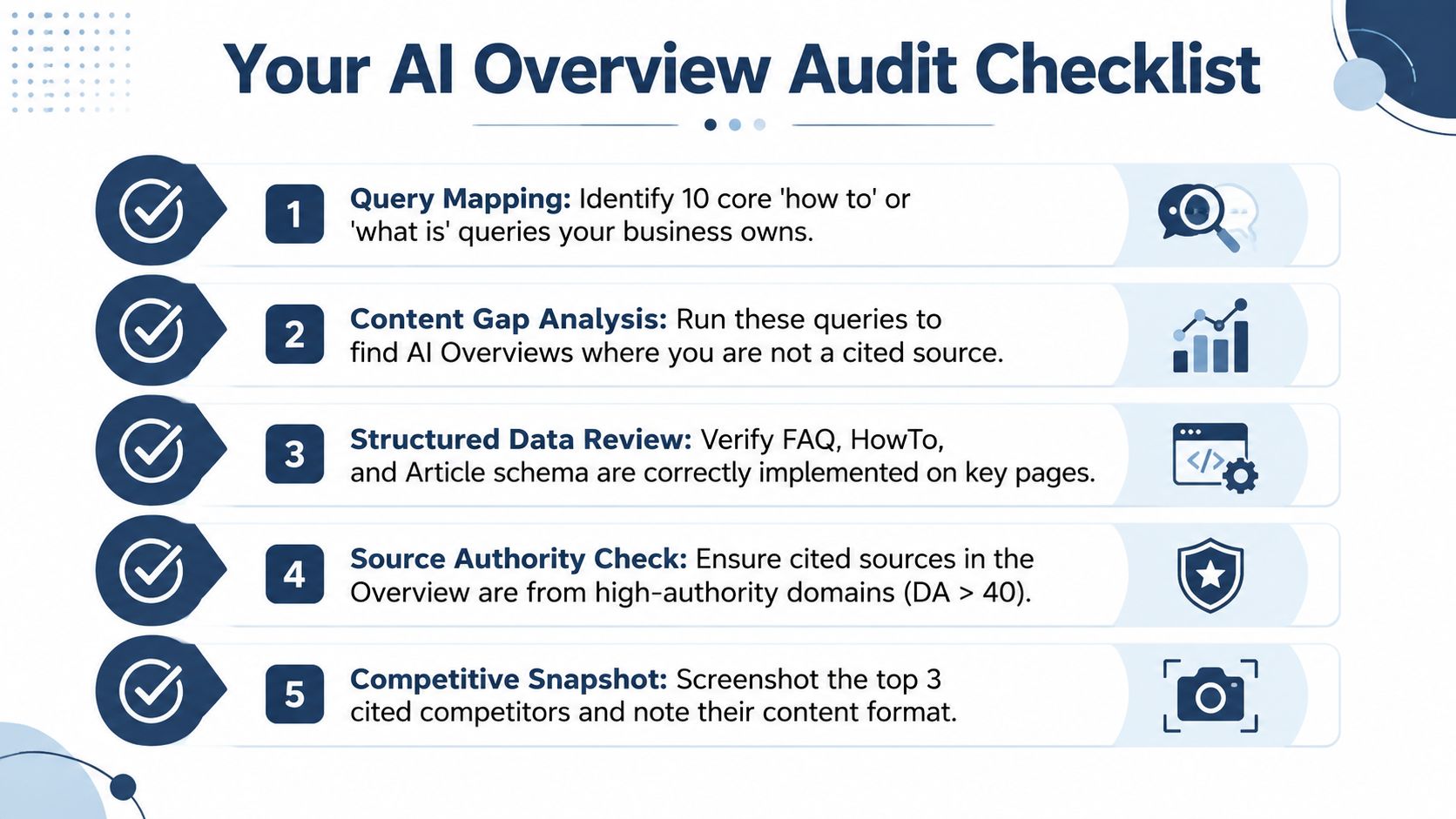
Run this audit as a white-hat investigation, not as another generic SEO sweep. You're looking for evidence that a page is easy to retrieve, understand and quote. Start with a small, representative set of commercial and pre-purchase queries, then inspect the pages Google already appears to favour.
Begin with a controlled query sample
Search 20 target commercial keywords in an incognito window, using the locations that matter to the business. Record whether an AI Overview appears, whether a local pack appears and which pages receive citations. Don't treat one search as permanent truth. AI-generated results can vary, so repeat important checks and record the date, device and location.
For a local electrician, sample phrases might include “emergency electrician York”, “how much does rewiring a house cost” and “is a burning socket dangerous?” The first tests transactional local visibility. The others test informational exposure and extractable expertise.
Score the page, not just the keyword
Use the following checks for every priority service page:
- Direct answer: Place a short answer directly beneath the relevant heading. It should resolve the question without forcing the reader through a long introduction.
- Question coverage: Add a visible FAQ block addressing the concerns customers raise before booking.
- Commercial clarity: Explain what affects the price, and include a guide price or pricing explanation where the business can do so accurately.
- Local relevance: Name genuine service areas and explain how the firm serves them. Don't create hollow location pages with identical copy.
- Proof: Show relevant accreditations, qualifications, memberships, experience and evidence of completed work where available.
- Crawlability: Check that important text and structured data exist in accessible HTML rather than appearing only after a script runs.
- Business identity: Compare the business name, address, telephone number and website details across the page, Google Business Profile and major directories.
- Page experience: Review loading performance, particularly the main content on mobile. A beautiful page that takes ages to appear isn't doing anyone a favour.
Use three practical verdicts
Mark each page Citation-Ready when it answers the target questions clearly, has credible business evidence, uses relevant schema and is technically accessible. Mark it Almost Ready when the foundations are sound but answer blocks, FAQs, local detail or entity consistency need work. Mark it Rebuild when the page is thin, duplicated, difficult to crawl or disconnected from the actual service.
The audit becomes useful when every mark leads to an action. A “Rebuild” page shouldn't receive another keyword tweak. It needs a better service explanation, stronger proof and a clearer customer journey.
On-Page and Schema Changes That Get You Cited
A service page becomes more citable when its strongest answer appears early and its structure matches the questions customers ask. Put the core answer beneath the H1, then expand the subject in a logical order. Don't make Google excavate the useful information like an archaeologist with a deadline.
For an emergency plumber, the opening could say:
An emergency plumber can help with serious leaks, loss of heating in vulnerable conditions, unsafe boiler faults and water damage risks in Leeds. Turn off the water or heating where it's safe to do so, avoid tampering with gas appliances and contact a qualified professional for urgent advice.
That passage identifies the service, location, problem types and immediate guidance. It also avoids promising an outcome the business can't guarantee.
Shape the page around real questions
Use an H2 such as “When do you need an emergency plumber in Leeds?” Follow it with a direct answer, then explain the signs in a short list. Add an FAQ section covering questions such as:
- Availability: Can you attend an emergency outside normal working hours?
- Safety: What should I do if I smell gas or see water near electrics?
- Pricing: What affects the cost of an emergency call-out?
- Scope: Which boiler or plumbing problems can you diagnose and repair?
For a solicitor, change the examples rather than copying trade language. A page about urgent conveyancing might answer which documents are needed, what causes delays and when a client should seek legal advice. An electrician could explain when a tripped circuit needs professional inspection and what information to provide before an appointment.
Clear service pages, useful FAQs, accurate business information and strong topical coverage form a sensible local SEO foundation. DigiVisi's small-business local SEO guidance covers that broader foundation.
Add structured data that reflects visible content
Use schema as a clarity layer, not a magic citation switch. A local plumbing page could combine:
- LocalBusiness, identifying the firm, contact details, address, service area and website.
- Service, describing emergency plumbing or boiler repair as the actual service offered.
- FAQPage, only where the questions and answers are visible on the page.
- HowTo, only where the page explains a sequence of steps.
A simplified LocalBusiness example might look like this in principle:
"@type": "Plumber", "name": "Example Plumbing Leeds", "telephone": "0113 000 0000", "url": "https://www.example.co.uk/emergency-plumbing-leeds", "areaServed": "Leeds"
A solicitor should use "@type": "LegalService" and describe the relevant legal service. An electrician could use "@type": "Electrician" and identify the actual electrical service. Use real details, valid URLs and only information displayed or supported by the page.
Don't add FAQ or HowTo markup to content that doesn't exist visibly. Don't expect schema to override weak copy, inconsistent NAP data or an untrusted domain. Validate the finished markup with Google's Rich Results Test, then compare the result with the old page before publishing.
Authority Signals, Citations and llms.txt
Extractable copy is only half the job. Google also needs reasons to believe that the business and page deserve inclusion. For a local firm, NAPW consistency means keeping the business name, address, phone number and website aligned across the website, Google Business Profile and third-party listings.
Create a spreadsheet with the business's website, Google Business Profile, Yell, Checkatrade, TrustATrader, Thomson Local and relevant trade directories. Add columns for name, address, telephone, website URL, opening hours and service categories. Highlight every mismatch, including an old telephone number, a shortened trading name or a directory link pointing to the homepage instead of the relevant service page.
Earn authority without playing silly games
White-hat authority building is slower than buying a pile of dubious listings, but it gives Google cleaner evidence. A local plumbing firm might contribute practical advice to a trade organisation, earn a mention in local news after supporting a community project or publish useful guidance that a regional publication chooses to reference.
Grey-hat shortcuts include mass citation syndication, manufactured “best of” placements and review schemes that generate praise without genuine customer experience. Black-hat tactics go further, with deceptive pages, hidden text, fake identities or manipulative links. None of these creates reliable expertise, and fabricated reviews can damage the business as well as its search visibility.
| Signal | White-Hat Method | Grey-Hat Shortcut | Risk Level |
|---|---|---|---|
| NAPW | Audit real profiles and correct mismatches | Submit identical data through bulk syndication | Medium |
| Reviews | Ask genuine customers for honest feedback | Use incentivised or generated reviews | High |
| Local mentions | Contribute useful expertise to relevant publications | Pay for undisclosed placements | Medium to high |
| Trade authority | Earn memberships, accreditations and relevant links | Create empty profiles for links | Medium |
| Business entities | Use consistent organisation and service information | Create duplicate local entities | High |
A relevant directory presence can help discovery, but it shouldn't replace genuine authority. For an AI-focused business listing strategy, AI startup directory submissions may be worth assessing selectively. Check relevance and editorial quality before submitting anything. More isn't automatically merrier.
Treat llms.txt as an experiment
An llms.txt file is an emerging way to present guidance about important site content to language-model systems. It isn't a replacement for robots.txt, XML sitemaps, crawlable HTML or structured data, and Google hasn't confirmed that it uses the file for AI Overview selection.
A minimal file for a plumbing business might identify the business, its key service pages, its areas served and its contact page in plain language. Keep it accurate and review it when the site changes. Implementing it is a low-risk experiment when it supports clear information architecture, but claiming it guarantees citations would be marketing fog in a bottle.
Measuring AI Overview Visibility in 2026
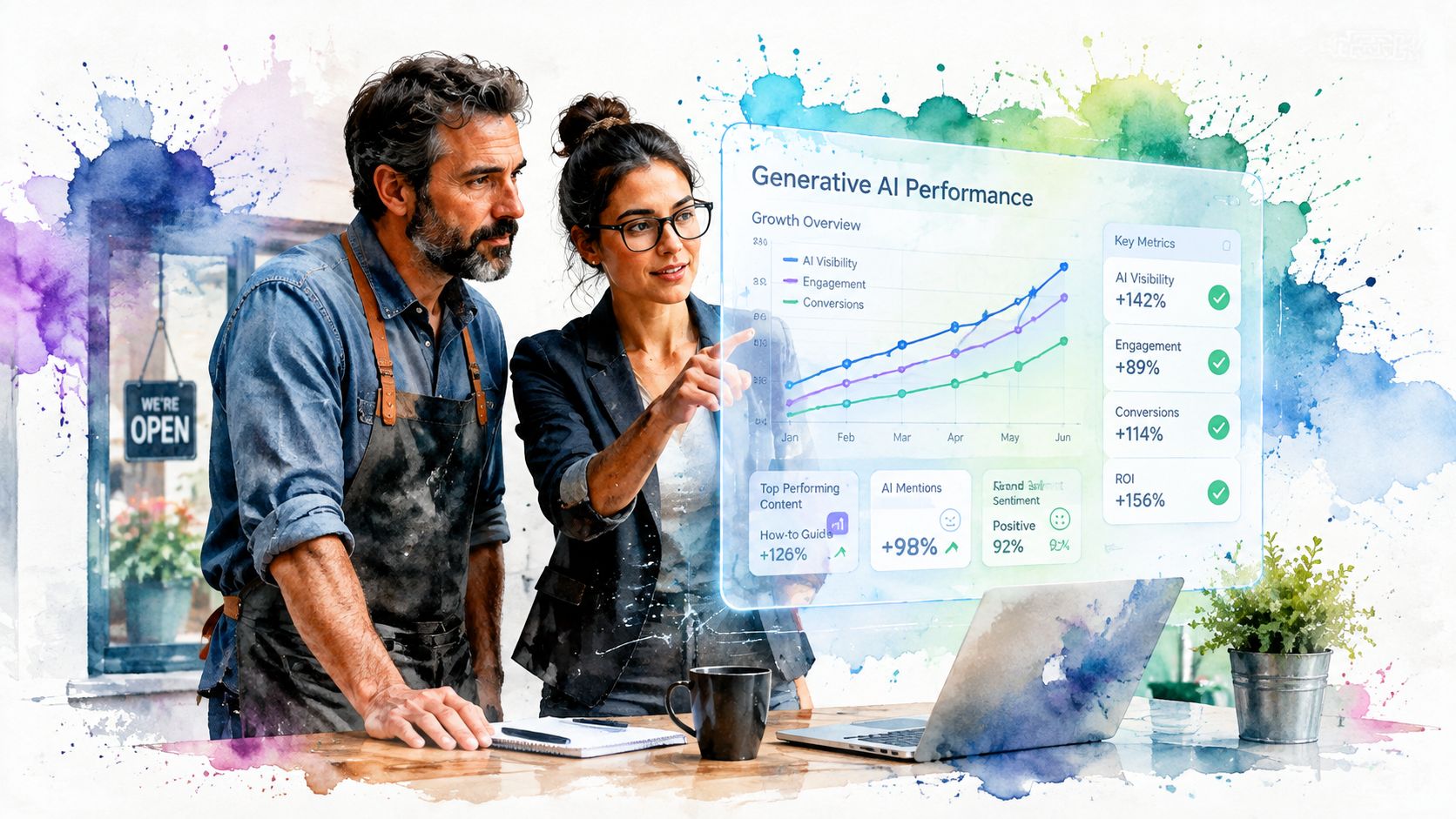
Google has begun rolling out generative AI performance reporting in Search Console, but the reporting doesn't yet answer every commercial question. The current report tracks impressions by page, country, device and date, while it doesn't provide clicks, CTR, average position or a query-level breakdown. This explanation of the Search Console generative AI report outlines the resulting measurement gap.
That means a local firm can see that a page received AI-related exposure, but may not know which exact query produced it or which passage Google cited. The rollout initially reached only a subset of UK-based site owners, so businesses shouldn't assume their data is immediately comparable with every other site.
Build a monthly visibility log
Use Search Console's performance area and look for the generative AI or AI Overview reporting option when it's available for the property. Export the page-level data and pair it with your own query sampling. A simple monthly sheet should include:
- Priority page: The service or advice URL being monitored.
- Trigger query: The exact search tested, with location and device.
- Overview status: Yes, no or sometimes.
- Citation evidence: Whether the URL appears as a cited source.
- Commercial outcome: Calls, form enquiries or booked consultations recorded through ordinary business systems.
Treat “impression” as exposure, not a lead. A cited page may influence a customer who later searches the brand directly, calls from a phone number remembered from the answer or visits through another route. Without a query-level report and click data, attribution needs restraint.
Report useful evidence, not vanity
The useful client conversation is about priority pages, recurring cited queries, visibility consistency and lead quality. A screenshot of one AI Overview can illustrate the opportunity, but it isn't a performance trend. Third-party trackers can help spot citation patterns, yet they should supplement Search Console and manual checks rather than replace them.
Google also distinguishes between normal organic indexing and AI Overview inclusion. The UK Competition and Markets Authority has required Google to provide publishers with an opt-out option, and publishers can block content from AI Overviews while remaining indexed and ranked in ordinary search. This guide to the AI Overview opt-out distinction explains why teams should track both surfaces separately.
Your 90-Day AI Overview Rollout Plan
AI Overview visibility isn't unmeasurable. It's partly measurable, which is a more useful and less glamorous answer. Search Console provides an emerging page-level signal, while controlled query checks, citation screenshots and lead records fill the gaps Google hasn't yet exposed.
Run the work as four fortnightly sprints, then use the remaining time to monitor and refine rather than endlessly rewriting everything.
| Sprint | Days | Primary Objective | Key Actions | Success Metric |
|---|---|---|---|---|
| Baseline audit | 1 to 14 | Establish the citation starting point | Crawl the site with Screaming Frog, segment Search Console queries, sample competitor citations and define the target query set | Priority pages and baseline citation checks recorded |
| Content release | 15 to 28 | Make important pages extractable | Rewrite openings, add direct answer blocks, publish useful FAQs and implement relevant FAQPage or HowTo schema | Pages pass the Citation-Ready review |
| Entity strengthening | 29 to 45 | Remove trust and identity inconsistencies | Audit NAPW, correct key citations, publish a careful llms.txt file and connect Google Business Profile services to canonical pages | Business details align across priority properties |
| Monitoring loop | 46 to 90 | Identify repeatable visibility patterns | Review available generative AI reporting weekly, repeat query checks and focus improvements on the page gaining the strongest citation evidence | Clearer page and query patterns, with no inflated attribution |
The first sprint should be boring. That's good. You need a clean baseline before claiming that a rewritten page has earned more visibility.
During the final window, don't spread effort evenly across every URL. If one emergency service page repeatedly appears as a cited source while another remains absent, inspect the difference in answer quality, local proof, internal links and entity clarity. Then apply the lesson carefully, not mechanically.
Repeat the cycle each quarter. Google's generated answers change, customer questions evolve and your competitors will eventually notice the same opportunity. The firms that win won't be the ones that publish the most pages. They'll be the ones that keep improving the pages Google can trust and customers can act on.
DigiVisi Ltd helps UK service businesses improve the technical, on-page, local and authority signals that support visibility in Google Search, Maps and AI Overviews, with transparent reporting and optional llms.txt implementation. Visit DigiVisi Ltd to discuss an audit of your priority service pages, citations and AI Overview exposure.